Crawlers — Eight Legs, One Locked Building, and a Horror Film That Never Quite Bites Back
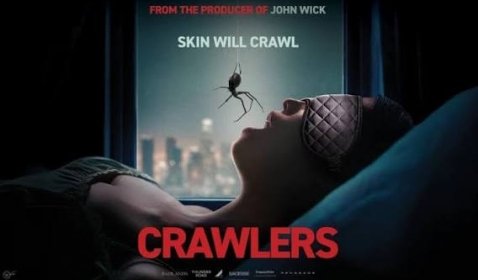
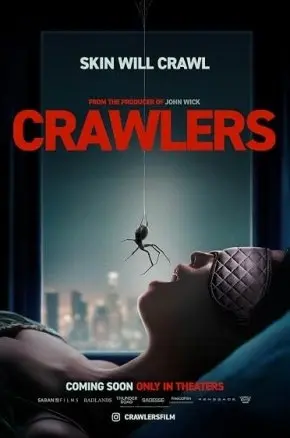
There is something uniquely unpleasant about the idea of spiders appearing where they have absolutely no business being. A spider in the corner of a room is one thing; a swarm of venomous creatures hiding in your shoes, crawling through your walls, or dropping from the ceiling is quite another. Crawlers understands this basic fear and builds its horror around it, turning an ordinary apartment building into a claustrophobic nightmare. The problem is that while the film has plenty of ways to make your skin crawl, it struggles to give audiences much to care about beyond the next eight-legged attack.
Directed by Ángel Gómez Hernández and written by Jayson Rothwell, Crawlers follows Serena (Matilda Lutz), the underappreciated manager of the rundown Paradiso Palms apartment complex. Already exhausted by her demanding job and a landlord who treats her with little respect, Serena finds herself facing a far more serious problem when a tenant's mysterious illness leads authorities to quarantine the building. The real threat soon becomes apparent: a rapidly multiplying population of venomous spiders, turning the residents' homes into traps with no obvious escape.
It is a straightforward creature-feature setup, but one with plenty of potential. An apartment building offers a natural maze of narrow hallways, cramped rooms, elevators, and hidden corners. Unlike a remote cabin or an isolated research facility, it is a familiar environment where people should feel safe. Hernández makes reasonable use of that setting, occasionally finding unsettling places for the spiders to appear. The fear comes less from their size than from the uncomfortable possibility that they could be almost anywhere.
The film's most effective moments lean into that simple idea. A quiet scene can become tense simply because a character is unaware of what is lurking nearby. The creature effects also deliver some impressively disgusting imagery, particularly when the film embraces its more graphic side. For viewers who enjoy practical-looking monster effects, grisly body horror, and the anticipation of an unexpected attack, there are sequences here that should produce a genuine shudder.
Unfortunately, Crawlers takes too long to fully exploit its strongest idea. Much of its early running time is spent introducing the residents and establishing their various personality flaws. Some of this character work is necessary, but the screenplay rarely gives these people enough depth to make their eventual struggles particularly affecting. Several tenants feel less like believable individuals than familiar horror-comedy stereotypes, introduced primarily so the audience can judge them before the spiders arrive.
Serena should be the emotional centre of the story. As the building's live-in manager, she is accustomed to being ignored and blamed for problems beyond her control. Her position gives the film an opportunity to explore class resentment, workplace exploitation, and the way people who keep a community running are often treated as though they are invisible. Lutz brings a welcome determination to the role, making Serena's attempts to protect the residents more engaging than the script sometimes deserves.
Yet the film never develops these ideas as thoroughly as it could. Serena's personal ambitions and difficult relationships occasionally suggest a more thoughtful story beneath the monster attacks, but those threads rarely become anything substantial. Her neighbours' gradual recognition of her worth also feels more like a requirement of the plot than the result of meaningful character development. By the time the residents are forced to rely on one another, the film has done too little to establish why their relationships matter.
The supporting cast fares less well. Some characters are deliberately irritating, including Gregg Sulkin's obnoxious social media personality, Bradley, while William Miller's landlord, Mr. Rossmore, provides an easy target for the audience's frustration. These personalities can be amusing in small doses, but the writing often mistakes unpleasantness for complexity. Rather than making the building's residents feel like a dysfunctional community, it leaves them resembling a collection of convenient targets waiting for their next encounter with a spider.
The tonal inconsistency makes matters worse. At times, Crawlers appears to embrace the ridiculous pleasure of a schlocky creature feature, complete with grotesque encounters and darkly comic situations. At others, it wants to be a serious survival thriller about fear, isolation, and institutional distrust. Neither approach is inherently wrong, but the film rarely finds a satisfying balance between them. Jokes can weaken the tension just as a grim scene is getting started, while the more serious passages lack enough emotional weight to make their drama convincing.
This uncertainty also affects the scares. Hernández demonstrates a reasonable eye for staging encounters, and the confined setting provides plenty of opportunities for suspense. Some scenes make effective use of what remains unseen, allowing anticipation to do the work before the spiders finally appear. But the film returns to similar tricks often enough that the surprises gradually lose their impact. After a while, the pattern becomes familiar: a character enters a confined space, the camera hints at danger, and another near-disaster follows.
That repetition is particularly frustrating because the basic premise is so naturally effective. Spiders can inspire fear without requiring elaborate mythology or complicated explanations. The challenge is to keep their appearances unpredictable while giving the audience reasons to care about the people in danger. Crawlers succeeds more consistently at the first task than the second.
Its short runtime helps keep the story moving, and there is little opportunity for the plot to become completely bogged down. Still, brisk pacing is not the same as momentum. The film can feel busy without becoming especially gripping, jumping between threats and character conflicts without building them into a genuinely memorable escalation. A few sequences stand out, but the overall experience lacks the sustained tension needed to turn a serviceable horror premise into something special.
There is also an unfortunate sense of familiarity to the film's central concept. Killer-spider stories have already explored the terror of infestations in confined residential spaces, and Crawlers does not offer a particularly fresh variation. Comparisons with Sébastien Vaniček's Infested are difficult to avoid, especially when both films turn an enclosed living space into a battleground against multiplying arachnids. Crawlers has moments of its own, but it rarely pushes its material far enough to establish a distinct identity.
Still, dismissing the film entirely would be unfair. Its nastier effects have a certain appeal, Lutz provides a solid anchor, and a handful of encounters demonstrate how effective a well-placed spider can be. The film understands that sometimes the most disturbing horror comes from a small movement in the background rather than a loud, elaborate set piece. For arachnophobes, even its less successful scenes may be enough to create an uncomfortable viewing experience.
Ultimately, Crawlers is a film with a clear understanding of what makes spiders frightening but a less convincing grasp of what makes a horror story linger after the credits. Its best moments are squirm-inducing, occasionally funny, and visually inventive enough to justify the premise. Its weaker stretches, however, are weighed down by thin characterisation, repetitive scares, and a tone that never settles.
There is a decent, grubby little creature feature hiding inside Crawlers. It simply needed sharper writing, more imaginative set pieces, and a little more faith in its own central nightmare. The spiders may be everywhere, but the film itself leaves surprisingly little behind once they have disappeared.
Rating: 2.5/5
Do you like it? Let's share it!



NOW SHOWING





COMING SOON