
By Any Means — A Brutal Chapter of American History That Refuses to Look Away
Some films about history ask audiences to remember. Others demand that they confront it.
By Any Means belongs firmly to the second category.
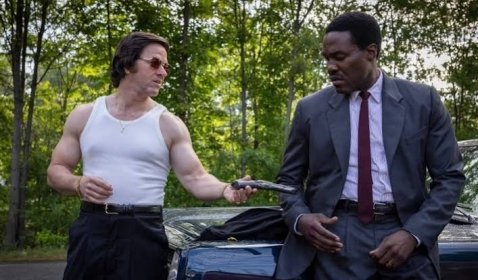
Directed by Elegance Bratton, the film takes audiences back to Mississippi in 1966, during one of the most dangerous periods of the American civil rights movement. Inspired by the aftermath of the murder of Black activist Vernon Dahmer, the story follows FBI agent Wayne Strider, played by Yahya Abdul-Mateen II, as he investigates the killing in a state where racism has become so deeply embedded in the system that justice itself seems almost impossible.
The film's central premise is compelling because it immediately places its protagonist inside a deeply compromised institution. Strider is a Black FBI agent returning to his home state, only to discover that the people supposedly responsible for enforcing the law are often unwilling—or simply uninterested—in protecting Black citizens.
Then comes Gregory Scarpa.
Played by Mark Wahlberg, Scarpa is a mobster brought in to assist the investigation. The pairing is deliberately strange: a Black federal agent and a white Mafia enforcer working together against the Ku Klux Klan. Their relationship provides some of the movie's lighter moments, with the two men gradually developing an uneasy understanding despite coming from completely different worlds.
Abdul-Mateen II gives Strider the seriousness the role requires. He plays the character as a man constantly balancing professionalism with anger, particularly when confronted with the indifference surrounding him. His performance is strongest when Strider doesn't need to say anything. A look can communicate the exhaustion of knowing that the system he works for is failing the people he is trying to protect.
Wahlberg, meanwhile, embraces Scarpa's swagger. The character is deliberately provocative, and Wahlberg plays him with the kind of confidence that makes Scarpa entertaining even when his behaviour is difficult to defend. His chemistry with Abdul-Mateen II gives the film a strange buddy-cop quality, although the contrast between their personalities never completely develops into the relationship the screenplay seems to promise.
Where By Any Means becomes genuinely difficult to watch is in its depiction of violence.
Bratton does not soften the brutality of the period. The murder of Vernon Dahmer is presented with disturbing directness, while later scenes involving torture, racist violence and threats against Black characters are deliberately graphic. The camera frequently refuses to look away, forcing the audience to sit with the cruelty rather than allowing it to become a distant historical footnote.
There is value in that approach.
American history is often easier to consume when violence is presented in a sanitized form. By Any Means rejects that comfort. It wants the audience to understand that the racism of the era was not merely an abstract political disagreement—it was physical, terrifying and sometimes deadly.
But there is also a point where the film's determination to shock begins working against it.
Bratton occasionally overstates what is already obvious. The symbolism can be heavy-handed, the score sometimes pushes too hard for an emotional response, and certain visual choices feel unnecessarily theatrical. One particularly strange sequence suddenly adopts the perspective and visual language of a first-person shooter, a stylistic decision that feels completely disconnected from the otherwise serious historical drama.
The film's relationship with historical accuracy is even more complicated.
By Any Means is inspired by real events, but it is not a straightforward historical account. Scarpa was a real figure, while Strider is a fictional composite based on multiple FBI agents. Bratton has openly approached the material as a way of using history to comment on contemporary racial issues rather than presenting a literal reconstruction of the past.
That creative freedom gives the film room to make its argument, but it also creates ethical questions. The Dahmer family has criticized the film's fictionalization, with Vernon Dahmer's son describing it as largely fictional and objecting to elements that he felt promoted a white-savior narrative.
Those criticisms matter because By Any Means is dealing with real people and real trauma.
The film is strongest when it stays close to the systemic reality of its setting: Black citizens being denied basic rights, law enforcement looking the other way and violent white supremacist groups operating with frightening confidence. It becomes less convincing when it turns history into a larger-than-life action narrative centered on its fictional FBI hero and Mafia antihero.
Visually, however, Bratton demonstrates considerable confidence.
Mississippi is presented with warm, saturated imagery that contrasts sharply with the ugliness taking place beneath the surface. The beauty of the landscapes and interiors makes the violence feel even more jarring. It is a deliberate choice, and one of the film's more effective artistic decisions.
Nicole Beharie, playing Strider's wife and a local community leader, also brings emotional depth to the story, although her character is frustratingly underused. The film spends so much time on the masculine partnership between Strider and Scarpa that it leaves less room for the Black community perspective that could have made the story considerably richer.
And that is ultimately the biggest problem with By Any Means.
It has something important to say, but sometimes it says it too loudly.
The film is powerful when it trusts the historical reality to speak for itself. It is less effective when the screenplay adds excessive violence, obvious symbolism or stylistic flourishes to make sure the audience understands the point. There are moments when the film feels less like a historical drama and more like a provocation deliberately designed to make viewers uncomfortable.
To its credit, it succeeds at that.
By Any Means is not an easy film to watch, and it was clearly never intended to be. Its depiction of racism is ugly, confrontational and occasionally almost unbearable. Yet beneath all the bloodshed and machismo is a serious attempt to examine how racial violence survives when institutions choose convenience over justice.
The film does not always handle that subject with the subtlety it deserves. Its fictionalized elements can be questionable, its storytelling occasionally becomes heavy-handed, and its action-oriented approach sometimes distracts from the much more compelling historical material.
But it is difficult to call the film forgettable.
By Any Means leaves an impression because it refuses to make the past comfortable. It may not always know when to pull back, but its anger is unmistakable. And while the film's fictional additions deserve scrutiny, its central reminder remains painfully relevant: injustice does not disappear simply because the law says it should.
Sometimes the most uncomfortable films are the ones that refuse to let history become comfortable.
Rating: ★★★☆☆ (3/5)
Do you like it? Let's share it!




NOW SHOWING






COMING SOON