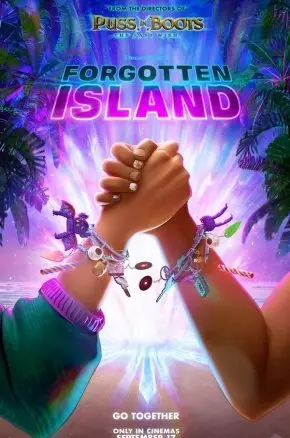
Forgotten Island — A Wildly Imaginative Journey Where Friendship Is the Real Magic
DreamWorks has never been afraid of mixing the familiar with the strange. From talking animals to fairy-tale parodies, the studio has built much of its identity around taking unusual ideas and turning them into accessible family entertainment. Forgotten Island may be one of its more distinctive attempts yet.
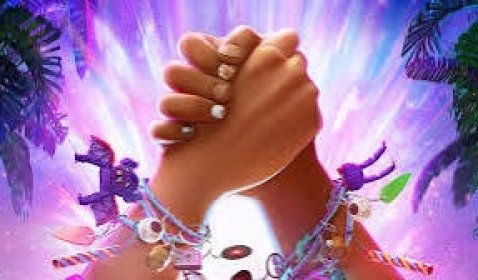
Directed by Joel Crawford and Januel P. Mercado, the animated fantasy follows Jo and Raissa, two best friends whose lives are about to change as they prepare to leave their teenage years behind. Raissa is getting ready to move to the United States for college, leaving Jo facing the possibility that the friendship that has defined much of her life may no longer remain the same.
Then, naturally, things get weird.
The two girls are transported through a mysterious portal into Nakali, a fantastical world populated by creatures drawn from Filipino mythology and folklore. What initially looks like a colourful adventure quickly becomes something more personal when they discover that their memories may be the price of finding their way home.
That is where Forgotten Island finds its emotional hook.
At first glance, the movie looks like another energetic animated adventure packed with monsters, jokes and colourful characters. Beneath all that spectacle, however, it is really about the fear of growing apart from someone who has been part of your life for as long as you can remember.
That idea gives the movie considerably more weight than its chaotic premise might suggest.
H.E.R. and Liza Soberano make Jo and Raissa an especially convincing pair. Their friendship feels lived-in rather than manufactured for the sake of the screenplay. The two characters have different personalities—Jo is the more reckless and eccentric one, while Raissa is considerably more practical and scientifically minded—but their differences are exactly what make their relationship work.
The film spends enough time establishing their friendship before the fantasy adventure begins, and that decision pays off later.
When the story starts asking what it would mean to lose those memories, the question actually matters.
That may sound like a small achievement, but it is one that many animated films struggle with. Too often, a movie tells us that two characters are best friends without giving us a reason to care. Forgotten Island understands that friendship needs history.
The strange world of Nakali is where the movie becomes considerably more playful.
The filmmakers fill the island with creatures inspired by Filipino folklore, giving the fantasy setting an identity that feels different from the usual European fairy-tale landscapes found in mainstream animation. The mythology is not simply pasted onto a generic adventure. It is woven into the characters' backgrounds and the stories they grew up hearing.
That cultural specificity is one of the film's greatest strengths.
Rather than explaining everything as though the audience needs a mythology textbook, the film allows these creatures to exist naturally within its world. Some are funny. Some are adorable. Some are genuinely unsettling.
And then there is Manang.
The Manananggal-inspired creature, voiced by Lea Salonga, is easily one of the film's most memorable creations. She is considerably darker than the kind of villain normally found in a family animation, and the movie does not completely soften her frightening qualities.
There are moments when Forgotten Island becomes surprisingly creepy.
The animation helps enormously. Crawford and Mercado are willing to let the monsters look strange rather than merely cute. Some of the creature designs are playful and exaggerated, while others have an almost horror-movie quality.
That contrast gives the movie an unpredictable energy.
One moment you are laughing at a ridiculous talking creature. The next, something with claws and teeth is chasing the protagonists through the darkness.
The result is a film that feels comfortable being both funny and slightly unsettling.
That tonal balance is not always perfect.
There are moments when the movie throws so many ideas, creatures and jokes at the screen that it becomes difficult to appreciate any single one of them. Forgotten Island is energetic almost to a fault. It rarely slows down, and some of its emotional beats could have benefited from a little more breathing room.
The comedy is similarly inconsistent.
There are genuinely funny moments, particularly in the interactions between Jo, Raissa and the strange creatures they encounter. But some jokes feel designed primarily to keep younger viewers entertained while the larger story moves forward.
Thankfully, the characters themselves remain engaging enough to carry the weaker material.
Dave Franco provides plenty of personality as Raww, a weredog who becomes an unlikely companion for the girls. Jenny Slate, Manny Jacinto, Kevin McCann and Ronny Chieng also contribute to a colourful supporting cast, with each creature bringing a different flavour to the increasingly strange journey.
Raww in particular is the kind of character who could easily have become irritating. Instead, his chaotic enthusiasm makes him a welcome addition to the group.
The film's visual style is another reason it stands out.
The animation has the polished quality expected from a major DreamWorks production, but it is not afraid to experiment with different approaches. There is a strong sense of movement and colour throughout Nakali, while the creatures have enough visual personality to make the world feel genuinely inhabited.
The Filipino setting also gives the movie an opportunity to move away from the increasingly familiar visual language of Western fantasy animation.
That matters.
Forgotten Island feels like it is trying to introduce audiences to a culture and mythology rather than simply borrowing them as decoration. The result is a fantasy world that feels welcoming even when it becomes dangerous.
At the centre of everything, though, is memory.
The film's central idea—that the memories we share with the people we love help define who we are—is hardly revolutionary. Animated films have explored friendship, growing up and letting go countless times before.
But Forgotten Island handles the idea with enough sincerity that it doesn't feel completely recycled.
The possibility that Jo and Raissa could return home without remembering each other gives the adventure an emotional urgency. Their greatest challenge isn't simply defeating a monster or escaping an enchanted island. It is figuring out whether a friendship can survive when the memories that built it disappear.
That is a surprisingly mature idea for a family film.
It also gives the movie its most affecting moments.
There is a bittersweet quality to watching these two friends confront the possibility that their lives are moving in different directions. Raissa's future is already taking shape, while Jo is struggling with what that future means for her. The fantasy adventure simply gives physical form to a fear that many people experience as they grow older.
Sometimes, people don't stop loving each other.
They simply end up somewhere different.
That emotional honesty keeps Forgotten Island from becoming just another colourful adventure.
It is not flawless. The pacing can be frantic, some supporting characters are underdeveloped, and the sheer number of ideas occasionally makes the story feel overcrowded. But those weaknesses are balanced by the film's imagination, cultural identity and surprisingly sincere emotional core.
Most importantly, it feels like someone genuinely cared about the story being told.
There is a clear affection for Filipino folklore throughout the film, but there is also affection for childhood itself—the strange stories we believe, the friendships we think will last forever, and the fear that growing up means leaving some of those things behind.
That is what makes Forgotten Island work.
It is colourful without being empty, funny without relying entirely on jokes, and sentimental without completely drowning in its own emotions.
The film may not be DreamWorks' most sophisticated animated achievement, but it is certainly one of its more distinctive recent adventures.
And when the final memories of Jo and Raissa become more important than any monster they have encountered, the film arrives at a simple but meaningful conclusion: the people we grow up with can become part of who we are, even when life eventually takes us in different directions.
Forgotten Island understands that losing a place is one thing.
Losing the memories of the people who made that place meaningful is something else entirely.
Rating: ★★★★☆ (4/5)
Do you like it? Let's share it!

NOW SHOWING
COMING SOON