Godzilla Minus Zero Review: When the King of Monsters Becomes a Symbol of Human Trauma
After the unexpected success of Godzilla Minus One, the biggest challenge for Takashi Yamazaki was never simply making the monsters bigger. The real challenge was finding another human story worthy of Godzilla's destruction. Godzilla Minus Zero largely succeeds because it understands that the most frightening thing about its monsters isn't their size—it's what they represent.
Set two years after the events of the previous film, the story once again follows Kōichi Shikishima as postwar Japan attempts to rebuild itself. Peace, however, proves temporary. A new creature emerges and brings another wave of destruction, eventually setting the stage for a confrontation between Godzilla and the three-headed King Ghidorah.
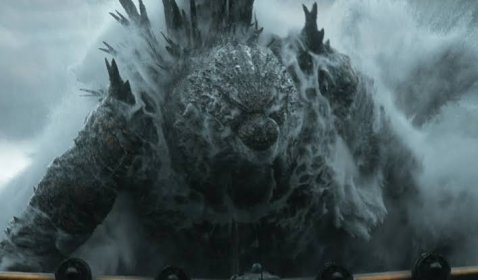
On paper, this sounds like exactly the kind of monster spectacle fans would expect from a Godzilla sequel. And when Yamazaki finally unleashes the kaiju action, the movie delivers. The destruction feels heavy, physical, and frightening. Rather than treating the monsters as oversized superheroes, Yamazaki presents them as forces of nature that humans can barely comprehend.
The visual effects are particularly impressive. Godzilla has an imposing physical presence, while Ghidorah makes an appropriately terrifying entrance. Their eventual confrontation is brutal rather than playful, with the violence carrying a disturbing resemblance to the horrors of war. Buildings collapse, bodies are thrown into the chaos, and even the monsters themselves are subjected to a surprising amount of punishment.
The sound design deserves equal credit. Godzilla's roar, the thunderous movement of the creatures, and Ghidorah's attacks create the kind of sensory assault that makes a cinema screen feel much too small. This is absolutely a film that benefits from being seen on the biggest screen possible.
But Godzilla Minus Zero is ultimately more interested in people than monsters.
That choice is both its greatest strength and, occasionally, its biggest weakness.
Kōichi remains haunted by the experiences that shaped him during the war, while his attempt to build a peaceful family life gives the film an emotional foundation. His relationship with Noriko and their adopted daughter provides the story with something personal to protect when the next disaster arrives. There is a genuine sense that these characters aren't simply fighting to save Japan—they're fighting for the possibility of having an ordinary life.
The film also continues Yamazaki's fascination with trauma and survivor's guilt. Characters carry memories of war, loss, poverty, and destruction, and those experiences influence how they respond to the latest crisis. Kanji Murakami, in particular, embodies the complicated psychological damage left behind by repeated catastrophe. His perspective makes it difficult to divide the characters neatly into heroes and villains. Most of them are simply damaged people trying to make sense of a world that keeps giving them reasons to be afraid.
This is where Godzilla Minus Zero feels most mature. The film understands that surviving a disaster doesn't mean escaping it emotionally. The physical destruction may eventually disappear, but grief and guilt remain.
Unfortunately, Yamazaki sometimes pushes this idea too hard.
At 135 minutes, the film occasionally feels longer than its story can comfortably support. Several dramatic scenes linger beyond the point where their emotional impact has already landed, and the human storyline can become repetitive. The movie wants every character's pain to matter, but giving every emotion extra room doesn't necessarily make the drama deeper.
This is especially noticeable when compared with Godzilla Minus One. That film found an unusually powerful balance between intimate human drama and spectacular monster action. Godzilla Minus Zero is more ambitious in some respects, but it doesn't always achieve the same emotional precision.
Still, when the film finally brings Godzilla and King Ghidorah together, the wait feels worthwhile.
Their battle is savage, enormous, and beautifully staged. There is very little sense of a traditional superhero showdown. These are predators trying to destroy each other, and Yamazaki shoots the confrontation with an almost horror-film sensibility. The violence is visceral enough to make the monsters feel vulnerable, while the scale reminds us how insignificant humanity remains in their presence.
What makes the climax particularly effective is that the battle isn't simply there to give audiences what they paid for. It reflects the film's larger obsession with destruction and survival. Humanity has already experienced war, nuclear devastation, and the loss of countless lives. Now two creatures embody that same violence on a scale that humans can barely control.
Godzilla Minus Zero doesn't quite reach the emotional heights of its predecessor, and its prolonged melodrama occasionally works against it. But it remains an ambitious, visually spectacular sequel that refuses to treat its monsters as empty attractions.
Verdict
Godzilla Minus Zero is a bigger and more brutal continuation of Takashi Yamazaki's Godzilla saga, with spectacular kaiju action and a surprisingly thoughtful exploration of trauma, grief, and survival. Its human drama can be overly drawn out, but the film's strongest moments demonstrate why this version of Godzilla works so well: the monster isn't merely destroying cities. He is a physical manifestation of everything humanity has failed to leave behind.
The sequel may not be as perfectly balanced as Godzilla Minus One, but when Godzilla and King Ghidorah finally collide, it delivers the kind of monstrous spectacle that reminds you why these creatures have remained icons for generations.
Rating: ★★★★½ (4.5/5)
Do you like it? Let's share it!



NOW SHOWING






COMING SOON