Pressure — The Fate of D-Day Hangs on a Forecast in This Riveting War Drama
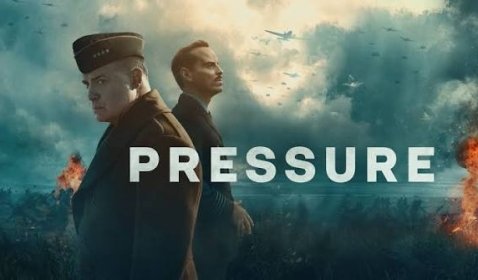
War films often focus on soldiers charging across battlefields, generals drawing up strategies and the devastating human cost of combat. Pressure takes a different approach. Set in the tense days before the Allied invasion of Normandy, Anthony Maras’s historical drama finds its suspense in something far less spectacular but every bit as consequential: the weather.
Starring Andrew Scott as British meteorologist James Stagg and Brendan Fraser as General Dwight D. Eisenhower, the film revisits the difficult decisions that preceded D-Day on 6 June 1944. With thousands of lives at stake and an enormous military operation already in motion, the Allies must decide whether conditions are suitable for an invasion or whether postponing it could create an even greater danger.
It is a fascinating premise, particularly because the outcome is already part of history. Audiences know the invasion happened, yet Pressure manages to make the uncertainty surrounding its timing feel genuinely consequential. The question is not simply whether the Allies will succeed, but how close they might come to making a catastrophic mistake before the operation even begins.
The story unfolds over the 72 hours leading up to the planned invasion, placing Stagg at the centre of an increasingly uncomfortable debate. His assessment of the approaching weather suggests that the conditions could be disastrous for the operation. The military commanders, however, are dealing with an entirely different set of pressures. Troops have been assembled, ships are prepared, and secrecy is essential. Delaying the invasion is not a decision that can be made lightly.
Stagg finds himself caught between professional responsibility and the demands of people who desperately need a clear answer. He cannot promise favourable weather simply because the military wants certainty. His job is to interpret the available evidence, communicate the risks and stand by his conclusions, even when those conclusions are unpopular.
Scott is the film's greatest asset. He plays Stagg as a serious, methodical man who values accuracy above personal approval. There is little theatrical heroism in his approach. Instead, Scott builds the character through restrained reactions, clipped exchanges and the frustration of someone who knows that being right may not be enough to convince the people who need to listen.
It is an excellent performance because Scott never turns Stagg into a conventional cinematic hero. The character is not especially charming, and his insistence on challenging other people's assumptions can make him difficult to work with. Yet his stubbornness comes from a sense of responsibility rather than a desire to win an argument. Scott allows that distinction to emerge gradually, giving the film an emotional centre that might otherwise have been lost among its military discussions.
Fraser brings a different energy to Eisenhower. As the Supreme Allied Commander, he must consider the consequences of every possible decision, balancing the urgency of the operation against the risk of sending an enormous invasion force into dangerous conditions. His frustration is understandable: the military needs a decision, but the weather refuses to offer a convenient answer.
Fraser gives Eisenhower a forceful presence, portraying a leader who must project confidence even when the circumstances offer little reassurance. At times, his performance is more outwardly expressive than the film requires, but the contrast between his urgency and Stagg's caution creates an effective dramatic tension. One man needs to make a decision; the other needs to ensure that the decision is based on evidence.
Chris Messina also contributes as American meteorologist Irving Krick, whose more optimistic assessment complicates the debate. The disagreement between the two forecasters gives the film a particularly interesting dimension. They are not simply arguing over competing opinions. Their professional reputations, methods and interpretations of the available information all come under scrutiny, with potentially devastating consequences if they get it wrong.
The film's strongest scenes emerge from these confrontations. Rather than relying on constant explosions or elaborate battlefield sequences, Maras builds suspense through conversations in rooms where every word seems to carry enormous weight. Maps, forecasts and changing weather conditions become instruments of tension. The prospect of postponing an invasion can be as gripping as the prospect of launching one, provided the audience understands what each choice might cost.
This approach is a natural fit for Maras, whose previous film, Hotel Mumbai, demonstrated his ability to create urgency from events based on real-life tragedy. Here, he works with a more contained setting, using the limits of the environment to intensify the pressure on his characters. The film rarely needs to remind viewers that the stakes are high. The mounting frustration in the room does that work for him.
Visually, Pressure also avoids the familiar grey-and-brown palette often associated with Second World War dramas. The cinematography uses richer colours and carefully composed interiors, creating a world that feels both elegant and ominous. The contrast is effective: these are rooms of planning and calculation, yet the consequences of the decisions made inside them will be measured in lives lost on distant beaches.
The score adds to the tension without overwhelming the dialogue. It gives the story momentum during its more procedural passages, helping the film maintain its pace even when the characters are discussing information that might initially seem dry. At approximately 100 minutes, the film is lean enough to prevent its central dilemma from becoming exhausting.
Still, Pressure is not without weaknesses. Its dialogue-heavy structure occasionally becomes repetitive, particularly when the same disagreements return without revealing much that is new. The film is at its most compelling when a conversation changes the balance of power or exposes a character's uncertainty. When exchanges simply restate the competing positions, the tension begins to flatten.
There are also moments when the supporting characters feel more like representatives of particular viewpoints than fully developed people. Given the scale of the historical events surrounding them, the film understandably concentrates on a small group of decision-makers. Nevertheless, a little more depth beyond the central debate might have made the larger operation feel more tangible.
The historical subject also presents an unusual challenge. Because the audience knows the Allies ultimately proceeded with the invasion, the film must find suspense in the process rather than the result. For the most part, it succeeds. Its tension comes from the possibility that a different decision, made at the wrong moment or for the wrong reasons, could have produced a vastly different outcome.
More importantly, Pressure gives recognition to the specialists whose work can be overlooked when history is told through its most famous military figures. Stagg's contribution is not measured by the number of troops he commands or the territory he captures. It lies in his ability to interpret uncertain information and insist that the evidence matters, even when powerful people would prefer a more convenient answer.
That idea gives the film relevance beyond its wartime setting. The story is ultimately about the difficulty of making responsible decisions when time is running out and the consequences of failure are immense. It is also about the courage required to disagree with authority when the facts demand it. These are not exclusively military concerns, and the film is at its best when it allows them to emerge naturally from the drama.
Pressure may not redefine the historical war genre, and its repeated meetings can occasionally make it feel more conventional than its premise deserves. But Scott's absorbing central performance, Fraser's imposing portrayal of Eisenhower and Maras's controlled direction keep the story engaging. It is a reminder that history is often shaped not only by the people who fight battles, but also by those who make difficult decisions before the fighting begins.
The film's greatest achievement is making the weather feel like a formidable adversary. There is no villain to defeat and no guarantee that careful planning will produce the desired result. There is only incomplete information, conflicting opinions and a deadline that cannot be ignored. That uncertainty gives Pressure its bite.
For viewers expecting a traditional battlefield spectacle, the film may feel too restrained. Those willing to settle into a tightly focused historical thriller, however, will find a compelling story about expertise, leadership and the terrifying responsibility of being right when so much depends on it.
Rating: 4/5
Do you like it? Let's share it!



NOW SHOWING






COMING SOON