Heart of the Beast — A Man, His Dog, and the Long Road Back from War
Heart of the Beast — A Man, His Dog, and the Long Road Back from War
There is a very simple idea at the centre of Heart of the Beast: a wounded man and his dog get stranded in the wilderness, and survival becomes the only thing that matters. It is familiar territory for a survival movie, but director David Ayer understands that the real story isn't about whether James Belmont can make it out alive. It is about why he keeps going.
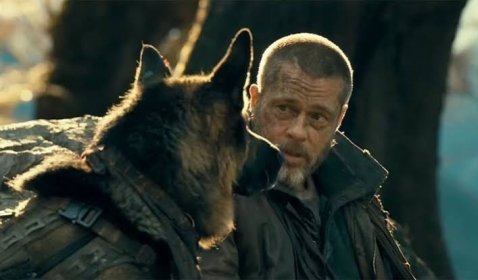
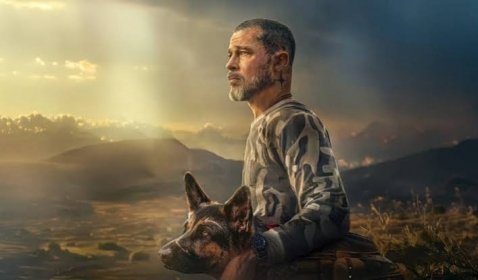
Brad Pitt plays James, a retired Special Forces veteran who has withdrawn from ordinary life and found something resembling peace in the Alaskan wilderness with Odin, his former combat dog. Both have returned from war carrying scars. James has his memories; Odin has a physical reminder of his service in the form of a missing leg.
Their quiet existence doesn't last.
After a plane crash leaves them stranded far from civilisation, James has to navigate brutal terrain while protecting himself and the animal that has become his closest companion. The journey quickly becomes a catalogue of physical punishment: freezing water, injuries, exhaustion and predators are all waiting for them.
On paper, it sounds like a straightforward adventure thriller. And, in many ways, it is.
What makes Heart of the Beast work is the relationship between Pitt and Odin.
Pitt wisely doesn't try to turn James into an overly dramatic action hero. He plays him with a tired restraint, allowing small gestures and expressions to communicate what the character cannot easily say. James is clearly a man who has spent years keeping his emotions under control, and his relationship with Odin becomes the one place where that armour can come down.
Odin, meanwhile, steals the movie.
The German Shepherd is expressive without being turned into a cartoon character. The film understands that a simple look from the dog can sometimes communicate more than a page of dialogue. His intelligence, loyalty and physical vulnerability give the survival story an emotional centre that the human drama occasionally struggles to provide.
That is also where the film's biggest weakness becomes apparent.
The screenplay is not particularly interested in subtlety.
James' trauma is repeatedly reinforced through flashbacks to his military past, while the dangers facing him and Odin become increasingly elaborate. One obstacle is followed by another, then another, until the survival journey begins to feel less like a realistic ordeal and more like an endurance challenge designed to keep the audience nervous.
Some of these sequences are effective. Others feel predictable.
Ayer has always been comfortable with physical violence, and Heart of the Beast certainly doesn't abandon that side of his filmmaking. There are moments of genuine brutality, especially when James is forced to confront the wilderness at its most unforgiving.
But the film is at its best when it slows down.
The quiet scenes between James and Odin are far more affecting than many of the larger action sequences. Watching James care for the dog's injured body, or simply seeing the two of them rest together after another exhausting stretch, gives the film an intimacy that the survival spectacle cannot replicate.
Visually, the wilderness is magnificent. The mountains, forests, rivers and enormous open spaces give the film a sense of isolation that is crucial to the story. The cinematography makes the environment feel beautiful and threatening at the same time.
Unfortunately, not all of the digital wildlife is convincing. The difference between the real landscapes and some of the computer-generated animals can be distracting, particularly in scenes that are supposed to feel immediate and dangerous.
J.K. Simmons brings some welcome personality as Walter Boone, a mysterious stranger James encounters early in his journey. His appearance adds a slightly eccentric Western quality to the otherwise stripped-down survival story, although the character feels more like a memorable detour than an essential part of the narrative.
The larger issue is that Heart of the Beast occasionally tries too hard to make its emotions land.
The bond between James and Odin is already strong enough. The film doesn't always need another flashback, another injury or another reminder that these two have suffered. When the movie trusts Pitt and the dog to carry the emotion themselves, it becomes surprisingly moving.
When it starts pushing the sentiment, the seams become more visible.
Still, there is something undeniably sincere about the film. Ayer isn't making a cynical action movie disguised as an emotional drama. He genuinely wants the audience to care about this man and his dog, and that sincerity goes a long way.
Pitt gives the film enough gravity to rise above its conventional structure, while Odin provides the kind of screen presence that no amount of star power can manufacture. Together, they make the journey worth taking even when the screenplay occasionally takes the easiest route.
Heart of the Beast doesn't reinvent the survival genre. It doesn't need to. Its greatest strength is considerably simpler: it understands that sometimes the most compelling survival story isn't about conquering nature, but about having someone — or something — worth surviving for.
It is rugged, sentimental and occasionally predictable, but there is a beating heart underneath all the mud, blood and wilderness.
And, unsurprisingly, that heart belongs mostly to the dog.
Rating: 3.5/5
Do you like it? Let's share it!

NOW SHOWING



COMING SOON