Holy Cannoli — A Sweet, Irreverent Comedy About Love, Faith, and the Art of Being Human
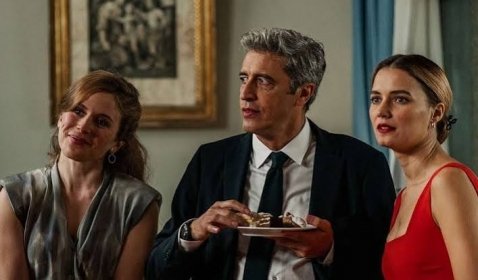
Religion and dessert might seem like an unlikely combination for a romantic comedy, but in Holy Cannoli (Che Dio perdona a tutti), director Pierfrancesco “Pif” Diliberto finds a surprisingly natural connection between the two. Both can inspire devotion, both come with traditions that people are reluctant to question, and both can become sources of conflict when someone insists there is only one correct way to enjoy them. Set against the colourful streets and culinary traditions of Palermo, this Italian comedy mixes romance, religious satire, and a generous helping of Sicilian sweets into a story that is often funny, occasionally provocative, and ultimately more thoughtful than its playful premise suggests.
Pif also stars as Arturo, a successful real estate agent whose life revolves around work, football, and an almost religious passion for traditional Sicilian desserts. He has strong opinions about cannoli, cassata, and other local delicacies, believing that recipes should be respected rather than altered to satisfy passing trends. His devotion to pastry is amusingly intense, especially considering that his romantic life has been considerably less successful.
Everything changes when Arturo meets Flora, played by Giusy Buscemi, a talented pastry chef and devout Catholic who dreams of opening her own shop. Arturo falls for her almost immediately, but there is one significant obstacle: he does not share her religious beliefs. Afraid that his scepticism will stand between them, he pretends to be a practising Catholic, setting off a chain of increasingly absurd situations that force him to reconsider what faith actually means.
It is a simple romantic-comedy setup, but Pif uses it to explore a more interesting question. Is faith something that can be demonstrated through rituals and declarations, or does it require a genuine commitment to the values a person claims to believe in? Arturo initially approaches religion as he approaches pastry: there must be a correct formula, and following the instructions should produce the desired result. Unfortunately for him, human relationships rarely work that way.
The film's opening passages establish its comic sensibility with considerable charm. Arturo's obsession with desserts gives him a distinctive personality, while his attempts to navigate romance reveal an awkwardness that makes him more endearing than conventionally heroic. He is not a smooth talker or a particularly sophisticated romantic lead. Instead, he is a man who understands the finer points of a well-made pastry better than he understands the complicated business of falling in love.
Pif plays Arturo with an understated comic style that suits the character. Rather than relying on exaggerated reactions, he often allows humour to emerge from a pause, an uncomfortable expression, or the sheer seriousness with which Arturo approaches something ridiculous. His performance makes the character's contradictions entertaining without turning him into a complete fool. Beneath his eccentricities is someone who genuinely wants to be loved but lacks the confidence to believe that being himself will be enough.
Buscemi provides an appealing counterpart as Flora. She brings warmth, elegance, and conviction to a woman whose religious beliefs are an important part of her identity. Flora is not simply a romantic prize for Arturo to win; her faith shapes how she understands relationships and how she expects people to behave. Buscemi gives the character enough sincerity to prevent the film's religious humour from feeling entirely dismissive, even when the screenplay invites the audience to question the difference between sincere belief and outward appearances.
Their chemistry is pleasant, although the romance occasionally moves faster than the characters' connection can comfortably support. Arturo's sudden determination to change himself for Flora is understandable as a comic premise, but the film could have spent more time developing the attraction between them. Their relationship works best when their differences produce genuine conversation rather than when the plot simply requires Arturo to find another way to maintain his deception.
Nevertheless, the romance provides the film with an accessible emotional foundation. Without it, the religious satire might have become a series of jokes aimed at hypocrisy. Through Arturo's feelings for Flora, the film gives those questions a personal dimension. His desire to become a better person is complicated by the fact that he initially begins the journey for the wrong reason: he wants to impress someone else rather than understand what he believes.
That distinction becomes increasingly important as the story develops. Arturo's attempt to practise Catholicism gradually transforms into an almost obsessive commitment to following its rules. What begins as a convenient lie becomes a serious experiment in morality, and he discovers that behaving according to a strict set of principles can have consequences he never anticipated.
The film's sharpest comedy emerges from this contradiction. Arturo starts questioning the habits of people who publicly identify as Catholic but appear less concerned with applying their faith to everyday decisions. Some characters attend church, observe religious traditions, and present themselves as morally upright while continuing to behave selfishly or cruelly. Their religion functions as a social identity rather than a meaningful guide to their actions.
Pif's satire is pointed but rarely joyless. He understands that hypocrisy is often more revealing than outright disbelief because it exposes the distance between a person's public values and private behaviour. Arturo may be an outsider to the faith, but his growing seriousness about its teachings forces those around him to confront inconsistencies they would prefer to ignore.
This is where Holy Cannoli becomes more than a lightweight story about a man pretending to be religious to impress a woman. It questions whether people want moral guidance or merely the comfort of belonging to a tradition. It also suggests that rules can become a convenient substitute for compassion when people focus on appearing righteous rather than considering how their actions affect others.
The film is particularly effective when it examines the tension between religious principles and the realities of modern life. Arturo's work as a real estate agent, for example, presents an amusing but revealing challenge. Honesty might be a virtue, but in a profession built around persuasion and negotiation, being completely truthful can complicate almost every transaction. His attempt to follow his newly adopted principles threatens not only his professional success but also the assumptions of colleagues who see nothing unusual about bending the truth.
These situations give the satire a broader relevance. The film is not interested solely in Catholic doctrine; it is concerned with the everyday compromises through which people justify their behaviour. Arturo's colleagues, romantic rivals, and acquaintances all have their own versions of the same problem. They want to consider themselves good people without necessarily accepting the inconvenience of acting like good people.
Francesco Scianna adds a particularly effective dimension to this theme as Tommaso, a charismatic womaniser whose outward confidence contrasts with his questionable personal conduct. His character embodies the kind of contradiction that Pif enjoys exposing: someone comfortable with the appearance of respectability but considerably less interested in the obligations that should accompany it. Scianna's performance gives the role enough charm to make the satire entertaining rather than simply condemnatory.
One of the film's most unusual elements is Arturo's imagined relationship with the Pope, played by Carlos Hipólito. Following a period of excessive eating that leaves Arturo in a sugar-induced stupor, he begins experiencing conversations with the pontiff, who becomes an unlikely spiritual adviser. The premise sounds ridiculous, and the film embraces that absurdity, but these scenes also provide some of its most thoughtful exchanges.
The Pope is portrayed as warm, patient, and more interested in human dignity than rigid displays of religious correctness. His conversations with Arturo help clarify the film's central argument: faith should not be reduced to a checklist of rules or a public performance of virtue. It should influence how people treat one another, particularly those who are vulnerable, different, or inconvenient.
These scenes carry an unmistakable affinity with the emphasis on mercy and inclusion associated with Pope Francis. Rather than presenting religion as an unquestionable authority, the film imagines a spiritual guide who encourages Arturo to consider the purpose behind the principles he is attempting to follow. Hipólito plays the role with gentle humour, preventing the character from becoming merely a device for delivering moral lessons.
At times, however, the film is too eager to explain its own message. Some of the dialogue spells out ideas that the characters' behaviour has already made clear, reducing the room for the audience to draw its own conclusions. The satire is most effective when it allows an absurd situation to expose a contradiction naturally. It becomes less subtle when characters stop to explain precisely what the scene is supposed to mean.
The romantic elements also occasionally compete with the film's broader ambitions. Arturo's relationship with Flora is meant to bring the questions of faith and morality into his personal life, but the story sometimes moves between romance and social commentary without establishing a completely satisfying rhythm. Certain developments feel designed to deliver the next joke or moral point rather than emerge naturally from the characters' decisions.
Even so, the setting gives the film a strong sense of identity. Palermo is more than an attractive backdrop. Its architecture, food culture, streets, and traditions contribute to the story's understanding of how religion and local identity can become intertwined. The film takes visible pleasure in Sicilian cuisine, lingering over pastries and other delicacies with an enthusiasm that makes Arturo's obsession entirely understandable.
The food photography is especially inviting. Desserts are presented with such affection that they become almost another character in the story, representing comfort, tradition, pleasure, and the temptation to indulge. Cannoli and cream-filled pastries provide visual comedy, but they also reinforce the film's recurring comparison between culinary perfection and moral certainty. Both can become absurd when the pursuit of purity matters more than the pleasure or humanity they are supposed to serve.
The pacing is generally accessible, although the film occasionally stretches its comic situations beyond their natural lifespan. Some jokes are repeated longer than necessary, and a few supporting characters remain more functional than fully developed. The story's central message is clear relatively early, so its later sections sometimes struggle to find fresh ways to explore the same ideas.
Still, the film's imperfections rarely destroy its goodwill. Pif approaches his characters with enough affection to keep the satire from becoming bitter. Arturo is foolish, Flora can be idealistic, and the people surrounding them are often hypocritical, but the film does not treat human weakness as a reason to abandon hope. Instead, it suggests that recognising our contradictions is the first step towards becoming more honest about them.
That generosity gives Holy Cannoli a welcome emotional quality. Its argument is not that faith is inherently foolish or that religious traditions have no value. Rather, it asks what happens when the appearance of righteousness becomes more important than kindness, and whether love can survive when people use moral certainty to avoid understanding one another.
By the conclusion, the film's sweetest insight has little to do with desserts. Arturo begins his journey believing that he must become someone else to earn Flora's affection. His experiences gradually challenge the assumption that love can be secured through performance, whether that performance involves pretending to be religious or attempting to follow every rule without considering its deeper purpose.
The film does not always explore these ideas with the subtlety they deserve, and its comedy occasionally loses momentum under the weight of its own commentary. Yet its combination of romance, culinary enthusiasm, and religious satire gives it a distinctive personality. Pif has created a comedy that is light enough to entertain but thoughtful enough to invite discussion after the laughter fades.
Ultimately, Holy Cannoli is a charming, occasionally uneven romantic comedy that finds an appealing balance between absurd humour and genuine moral curiosity. Pif's understated performance, Buscemi's warmth, and the film's affectionate portrait of Palermo make it an enjoyable experience, while its examination of hypocrisy and compassion gives the story more substance than its title initially suggests.
It may not reinvent the romantic-comedy formula, and its message sometimes arrives with more emphasis than necessary. But there is something refreshing about a film willing to question the difference between being seen as a good person and actually behaving like one. Like a traditional Sicilian pastry, Holy Cannoli works best when it respects the ingredients rather than overcomplicating the recipe.
Rating: 4/5
Do you like it? Let's share it!



NOW SHOWING





COMING SOON