You Can See Everything — A Mesmerising Game of Deception Where the Truth Is Never Quite What It Seems
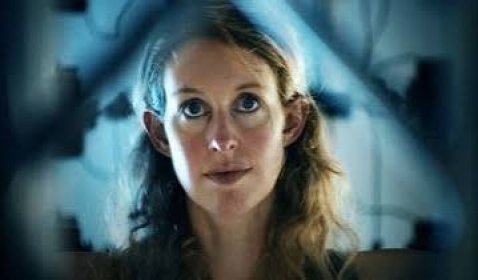
What happens when a filmmaker known for making people uncomfortable meets one of the most controversial figures in modern business history? In You Can See Everything, that question becomes the starting point for a documentary that is as unsettling as it is fascinating. Directed by Nathan Fielder and Lance Oppenheim, the film brings together Fielder's deadpan humour, Oppenheim's distinctive visual style, and the enigmatic presence of Elizabeth Holmes, the disgraced founder of Theranos. What follows is not a conventional documentary about corporate fraud, but a strange, absorbing examination of deception, trust, and the difficulty of knowing what another person truly believes.
Holmes became a household name after Theranos promised to revolutionise blood testing with technology that supposedly required only a tiny amount of blood. The company's claims attracted enormous investment and influential supporters before its technology and business practices came under intense scrutiny. Holmes was subsequently convicted of fraud and sentenced to prison. Her rise and downfall have already inspired extensive media coverage, including documentaries, podcasts, and the television drama The Dropout. At first glance, another film about her might seem unnecessary.
Fielder and Oppenheim, however, approach the subject from an unusual angle. Rather than simply reconstructing the Theranos scandal, they examine Holmes in the period leading up to her imprisonment, when she and her partner, Billy Evans, allow a small documentary crew into their family life. Their apparent intention is to offer a more intimate account of who they are, challenging the public perception of Holmes as a calculating fraudster. Yet inviting cameras into one's home does not necessarily mean surrendering control over one's image.
That contradiction becomes the film's central source of tension. Holmes presents herself as approachable and composed, while Evans appears eager to explain their circumstances and defend their family. Fielder, meanwhile, approaches them with the awkward persistence that has defined much of his work. His questions are often direct enough to make ordinary social interactions uncomfortable, and he seems remarkably willing to allow silence to linger until someone feels compelled to fill it.
The resulting dynamic is extraordinary. Holmes rarely gives the impression of being completely caught off guard, while Fielder's apparently unassuming manner conceals a relentless curiosity. Their conversations develop into a quiet contest in which every smile, hesitation, and carefully chosen phrase seems open to interpretation. The film does not need conventional suspense techniques to create tension. It simply allows the camera to remain present long enough for the smallest interaction to become strangely significant.
Fielder's greatest strength as a filmmaker is his understanding of discomfort. In his previous work, particularly Nathan for You and The Rehearsal, he has used elaborate situations to expose the contradictions between what people say they want and how they actually behave. You Can See Everything applies that sensibility to a subject whose relationship with truth has already become a matter of public record.
Yet the documentary is not merely an extended interrogation. Fielder is also part of the experiment, and the film gradually encourages viewers to question his intentions as much as those of the people in front of his camera. Is he genuinely trying to understand Holmes? Is he attempting to expose her? Or is the entire encounter shaped by the possibility that a documentary filmmaker can manipulate a situation while appearing to observe it objectively?
These questions give the film a fascinating self-awareness. Every documentary involves decisions about what to film, which conversations to include, and how to arrange the resulting footage. Most documentaries attempt to make those decisions disappear behind the appearance of an unmediated reality. Fielder and Oppenheim instead turn the process itself into part of the story, reminding viewers that what they see has been shaped by the people who made it.
The title, You Can See Everything, becomes increasingly ironic in this context. Access to someone's home does not guarantee access to their private thoughts. A camera may capture a person's expression, but it cannot establish whether that expression reflects sincerity, performance, or a mixture of both. Even when the filmmakers appear to have obtained remarkable access, the people they are documenting remain fundamentally difficult to understand.
This is where the film becomes particularly compelling. Holmes is not presented as a mystery that can be neatly solved by the end of three hours. Her conviction establishes the legal reality of her wrongdoing, but it does not automatically explain every aspect of her personality, her motivations, or the way she understands her own actions. The documentary explores that gap without pretending to close it.
Holmes's composure is especially striking. Her carefully controlled manner can appear reassuring in one moment and deeply unsettling in the next. She speaks with a confidence that invites belief, yet the knowledge of her past makes it difficult to accept her presentation at face value. The film repeatedly places viewers in this uncomfortable position, forcing them to confront their own assumptions about what honesty should look and sound like.
There is a temptation to interpret every gesture as evidence of manipulation, particularly when watching someone whose public image has become synonymous with deception. But the film complicates that response. It does not simply ask whether Holmes is lying; it asks how much can actually be inferred from watching someone speak, and whether the desire to identify a definitive truth can itself distort our judgement.
Billy Evans adds another intriguing dimension to the story. His willingness to participate in the documentary and defend his partner creates a relationship that is difficult to categorise. At times, he appears genuinely devoted to Holmes. At others, his statements and behaviour introduce fresh questions about his motives and the boundaries between loyalty, self-interest, and denial. The film's portrait of their relationship becomes one of its most revealing elements, demonstrating how personal devotion can coexist with an unsettling refusal to confront uncomfortable facts.
The documentary's visual style reinforces this sense of unease. Oppenheim, whose earlier work includes Some Kind of Heaven and The Beauty of the Issue, favours tightly framed compositions, saturated colours, and slow camera movements that make ordinary surroundings feel faintly surreal. The family home becomes an environment in which every room seems to contain an unspoken tension. Familiar domestic activities acquire an almost theatrical quality, as though the people being filmed are simultaneously living their lives and performing versions of themselves.
This approach might initially seem artificial, but that artificiality serves the film's purpose. The camera never allows viewers to forget that they are watching a constructed representation of reality. The carefully composed images suggest that even the most ordinary moments can become performances when people know they are being observed. Rather than hiding the machinery of filmmaking, Oppenheim makes it part of the experience.
The film's nearly three-hour runtime is demanding, but its patient pacing allows the discomfort to accumulate. Conversations are given room to develop, silences are allowed to linger, and small inconsistencies become more significant through repetition. The approach requires considerable trust from the audience, particularly during passages in which little appears to be happening. Yet these moments establish the atmosphere necessary for the film's more surprising developments.
Viewers accustomed to conventional true-crime documentaries may find the structure frustrating. There are no straightforward investigative revelations designed to settle every question, and the film is less interested in explaining the mechanics of the Theranos scandal than in examining the people who remain entangled in its aftermath. Those expecting a comprehensive account of corporate fraud may find the emphasis on interpersonal dynamics distracting.
However, the decision to focus on behaviour rather than simply reciting established facts gives You Can See Everything its distinctive power. The Theranos scandal was not only a story about technology that failed to deliver on its promises. It was also a story about persuasion, ambition, reputation, and the willingness of powerful people to believe what they wanted to hear. Fielder's approach makes those mechanisms feel immediate rather than historical.
The documentary becomes even more ambitious as it develops, expanding beyond the initial encounter between filmmaker and subject. Without revealing its major turns, it is fair to say that the film increasingly questions the boundaries between observation, reconstruction, and performance. Its later developments do not merely add surprises to the story; they change the way viewers understand the filmmaking process itself.
This is an exceptionally risky approach. A documentary that constantly challenges its own credibility could easily become an exercise in cleverness, leaving audiences with nothing but uncertainty. Fielder and Oppenheim come close to that danger at times, particularly when the film's elaborate construction threatens to overshadow the human consequences of the events being examined. Nevertheless, their willingness to question their own methods is precisely what distinguishes the film from more conventional portraits of notorious public figures.
There is also an ethical tension running beneath the film's formal experimentation. Holmes's crimes involved the erosion of trust, with serious consequences for investors, employees, and patients who relied on Theranos's promises. A documentary focused on her personality and private relationships risks allowing the fascination surrounding a charismatic figure to overshadow those harmed by her actions. The film occasionally approaches that problem without fully resolving it.
Still, its refusal to offer easy psychological explanations is valuable. It does not suggest that understanding someone excuses their behaviour, nor does it assume that a person's public reputation tells us everything worth knowing about them. Instead, it explores the uneasy space between accountability and curiosity, asking whether we can examine a person closely without turning that examination into either a defence or a condemnation of their entire character.
The film's most disturbing insight may be that deception does not always look dramatic. It can appear as confidence, warmth, loyalty, or the ordinary desire to protect one's family. People do not necessarily experience themselves as villains, even when their actions have caused significant harm. They may construct narratives that allow them to preserve a favourable image of themselves, gradually blurring the distinction between what they know and what they wish to believe.
This is not an entirely new observation, but You Can See Everything gives it a remarkably contemporary urgency. In an era dominated by carefully managed public images, social media performances, and increasingly sophisticated forms of digital manipulation, the ability to distinguish authenticity from presentation has become more difficult than ever. The film's questions extend well beyond Holmes, reaching into the way audiences consume celebrity, news, and documentary entertainment.
Fielder's performance as an interviewer is crucial to this success. His apparent awkwardness creates a contrast with Holmes's controlled demeanour, but his persistence prevents the conversations from settling into comfortable exchanges. He is funny without turning the film into a conventional comedy, and his willingness to make himself part of the problem gives the documentary an additional layer of self-criticism.
Oppenheim, meanwhile, ensures that the film remains visually engaging even when its subject matter becomes repetitive or its conversations appear to lead nowhere. Together, the directors create a work that is formally adventurous without losing sight of the people at its centre. Their methods are occasionally excessive, but the excess serves a genuine purpose: to make viewers question the assumptions they bring to the act of watching.
Ultimately, You Can See Everything is not a documentary that provides the comforting satisfaction of a mystery solved. It offers something more unsettling: the recognition that even extensive access, persistent questioning, and hours of footage may leave essential truths unresolved. Its power lies in the space between what is shown and what can reasonably be concluded.
The film is occasionally indulgent, and its lengthy runtime will test viewers who prefer a more direct approach to documentary storytelling. Its emphasis on psychological ambiguity may also frustrate those who want a clearer account of the Theranos scandal. But these limitations are inseparable from its ambition to examine not just a notorious subject, but the very process through which subjects become stories.
By the end, the title feels less like a promise than a challenge. We may be able to see almost everything that a camera records, but seeing is not the same as understanding. You Can See Everything turns that distinction into a gripping cinematic experience, leaving viewers to question their own instincts long after the final image.
Rating: 4.5/5
Do you like it? Let's share it!



NOW SHOWING




COMING SOON