
Primetime — Robert Pattinson Commands a Sleazy World Where Justice Becomes Entertainment
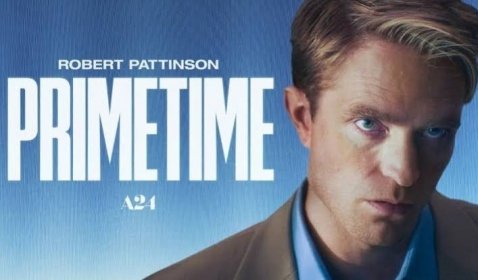
Television has always had an appetite for spectacle, but few things reveal its darker instincts quite like the moment when someone else's humiliation becomes a national obsession. Primetime, directed by Lance Oppenheim, explores that uncomfortable territory through a fictionalised account of the controversial American reality series To Catch a Predator. Led by Robert Pattinson in one of his most unsettling performances, the film examines the uneasy relationship between public morality, personal ambition and the entertainment industry's relentless pursuit of ratings.
Set in 2006, the story follows television presenter Chris Hansen (Pattinson), the face of a programme that lures suspected sexual predators to staged houses before confronting them on camera. The formula is simple and undeniably provocative: potential offenders arrive believing they are meeting minors, only to find themselves exposed in front of a television crew. Police subsequently handle the criminal investigations and arrests, but the public humiliation is what makes the programme compelling viewing.
For Hansen, however, exposing wrongdoing is only part of the attraction. His growing fame has given him a sense of importance that extends well beyond his role as a presenter. He sees himself as a crusader against evil, a man performing a necessary public service. Yet behind the polished delivery and solemn declarations lies someone increasingly fascinated by his own influence. He wants to be recognised, admired and remembered, and the distinction between serving the public and serving his ego becomes harder to maintain.
Pattinson understands this contradiction beautifully. His portrayal is deliberately exaggerated, from Hansen's carefully practised voice to his almost theatrical expressions of outrage. He moves through the television studio with the confidence of a man who believes he has discovered a higher calling, even when his behaviour suggests that personal ambition is doing much of the driving.
It is an uncomfortable performance, but an absorbing one. Pattinson does not attempt to make Hansen conventionally sympathetic. Instead, he presents a man whose self-righteousness has become a kind of performance in itself. Hansen appears to believe in his mission, yet he also seems addicted to the attention that comes with it. Pattinson captures the peculiar combination of conviction and vanity that allows his character to mistake professional success for moral superiority.
The result is one of the film's most compelling elements. Hansen can be charismatic when he wants to be, but there is something artificial about nearly every interaction. He knows how to command a room, deliver a line and create the impression of sincerity. What he seems less capable of doing is recognising where the television persona ends and the actual person begins.
Oppenheim, making his feature-fiction debut after establishing himself as a documentary filmmaker, builds the film around this uneasy relationship between performance and reality. His experience observing people in constructed environments proves useful here. The television studio, the staged suburban houses and the behind-the-scenes offices all feel like spaces in which everyone is playing a role, whether they acknowledge it or not.
The film's visual style reinforces that idea. Colours are saturated, lighting is frequently lurid, and the camera often moves uncomfortably close to the characters. The effect evokes the sleazy atmosphere of mid-2000s television, when reality programming increasingly blurred the boundaries between journalism, entertainment and public punishment. Ordinary kitchens become makeshift stages, while the control room transforms private humiliation into a carefully edited product.
There is a deliberate artificiality to the presentation, and it works. The suburban homes look almost too ordinary, making the confrontations staged inside them feel all the more disturbing. These are not grand criminal hideouts or cinematic lairs. They are familiar domestic spaces turned into sets for a television production, where the promise of moral outrage is carefully packaged for mass consumption.
Yet the most interesting part of Primetime takes place away from the cameras.
Merritt Wever plays Andie Bender, a hard-edged producer responsible for keeping the programme running. She understands the mechanics of television and knows that moral conviction alone will not keep a show on the air. Ratings matter, and ratings depend on giving audiences something more dramatic than what they have already seen. Wever brings a sharp, practical intelligence to the role, portraying someone who has become comfortable with the compromises required to maintain a successful production.
Andie is not immune to the moral problems surrounding the programme, but she is accustomed to working within its contradictions. Her job requires her to manage people, anticipate crises and ensure that the spectacle continues. As the pressure to deliver bigger stories increases, she begins to question whether the rewards of staying with Hansen are worth the personal and professional cost.
Wever is particularly effective in these quieter moments. Her character often seems to understand the situation more clearly than the man at the centre of it, yet recognising a problem is not the same as being willing to abandon the system that created it. Andie's predicament reflects one of the film's recurring concerns: people can recognise the ethical compromises they make while continuing to benefit from them.
Skyler Gisondo provides another valuable perspective as Dan Plumb, an aspiring actor recruited to act as a decoy. Dan sees the opportunity as a possible break into the entertainment industry, imagining that working with a nationally recognised presenter might lead to something bigger. Instead, he finds himself performing a role that places him in increasingly uncomfortable situations.
Gisondo gives Dan an appealing mixture of nervousness, ambition and uncertainty. He is not an innocent who has wandered into the wrong place without understanding anything about the arrangement. He wants a career, and he is willing to accept a questionable job because he believes it might help him get one. That makes his predicament more interesting than a straightforward story about an exploited newcomer.
Dan gradually becomes aware of the gap between the programme's public image and the reality of producing it. The show claims to expose dangerous behaviour, but its methods require manipulation, theatrical confrontation and the transformation of serious criminal concerns into entertainment. Dan's growing discomfort provides the film with an emotional perspective that Hansen himself often lacks.
The supporting cast helps create a convincing portrait of a production team whose members have different reasons for remaining involved. Their relationships are shaped by competition, professional insecurity and the knowledge that another programme could easily take their place. Everyone is trying to secure a future in an industry where success is measured by attention, and attention is rarely guaranteed to last.
This is where the film's satire becomes especially effective. Hansen is not operating alone. His behaviour is encouraged by a system that rewards confrontation and treats escalating outrage as evidence of a successful broadcast. The programme's audience may believe it is watching justice being served, but the production team is also watching ratings figures, considering rival networks and wondering how to make the next episode more compelling.
The search for a particularly prominent target intensifies these pressures. Hansen becomes fixated on catching a high-profile figure, someone whose exposure would produce a far greater reaction than another anonymous suspect. The pursuit creates a sense of mounting danger, while revealing how easily the programme's original purpose can become secondary to its appetite for a bigger story.
Unfortunately, Primetime is less convincing when it attempts to turn these observations into a sustained dramatic argument.
The film raises important questions about vigilantism, media ethics and the relationship between public outrage and genuine accountability. Is exposing wrongdoing on television a form of public service, or does the spectacle risk reducing serious harm to a source of entertainment? Can a programme claim moral authority when its success depends on making people watch? And what happens when the people responsible for delivering justice begin to enjoy the power of humiliation?
These questions are compelling, but Oppenheim and screenwriter Ajon Singh do not always explore them with enough precision. The film often seems more interested in creating a grim atmosphere than examining the implications of its own premise. It gestures towards a larger critique of reality television without fully establishing what, exactly, it wants the audience to conclude.
The treatment of the victims of sexual abuse is particularly troubling. The programme's supposed purpose is to prevent harm and expose predatory behaviour, yet the film spends far more time examining the egos and professional rivalries of the people producing the show. The individuals most directly affected by the underlying crimes remain largely outside the frame.
That omission may be intentional, reflecting a world in which the victims become secondary to the spectacle built around the offenders. Even so, the film rarely pushes this observation far enough. It risks reproducing the same imbalance it appears to criticise, turning the consequences of abuse into background material for a story about television personalities.
The screenplay also struggles to bring its various subplots together. Hansen's troubled personal life and Andie's professional uncertainty offer opportunities to explore the difference between public morality and private behaviour. However, these threads sometimes feel detached from the central conflict, as though the film is assembling a collection of ideas about hypocrisy rather than developing one coherent dramatic argument.
The pacing becomes uneven as the story approaches its climax. Tension builds effectively as the production team pursues a more consequential target, but the eventual confrontation arrives with a sense of inevitability. The film reaches its crisis and then moves towards an ending that feels more abrupt than illuminating. Hansen's behaviour has been exposed, his professional world has reached a breaking point, yet the emotional consequences remain frustratingly unclear.
This is particularly disappointing because Pattinson's performance deserves a stronger dramatic framework. He gives Hansen an unnerving mixture of vanity, aggression and theatrical conviction, creating a character who is fascinating to watch even when the film itself loses direction. There is a genuine sense of danger in his determination to keep the programme successful, not because he is a conventional villain but because he has convinced himself that his ambitions are morally justified.
Oppenheim's direction remains visually assured throughout. The period details capture the particular atmosphere of mid-2000s American television, while the shifting visual textures make the audience increasingly aware of how much of the action is being staged for a camera. The film's formal choices are often more persuasive than its screenplay, creating a world in which authenticity itself feels like another commodity being sold.
Ultimately, Primetime is an ambitious, frequently unsettling film that understands the seductive power of public humiliation but struggles to turn that understanding into a fully developed story. Pattinson delivers an outstanding central performance, while Wever and Gisondo provide valuable counterpoints to his increasingly self-important presenter. The visual design is distinctive, and the behind-the-scenes television setting offers plenty of opportunities for sharp satire.
Yet the film's ideas remain frustratingly unresolved. It exposes the machinery of sensationalist television without always examining the human consequences of that machinery, and its ending leaves the central character's transformation less clear than it should be. There is a sharper, more incisive film buried within this one, particularly in its exploration of the difference between seeking justice and enjoying the power to punish.
What remains is an uncomfortable portrait of an industry that can turn moral certainty into a marketable product. Primetime is at its best when it reveals how easily a righteous mission can become a personal brand, and how quickly a television presenter can begin to confuse public attention with genuine virtue. It is less successful when it tries to make those observations add up to a satisfying drama.
Rating: 3.5/5
Do you like it? Let's share it!




NOW SHOWING






COMING SOON