
Ramayana: Rise of a Legend — A Mythic Spectacle Caught Between Divine Ambition and Human Emotion
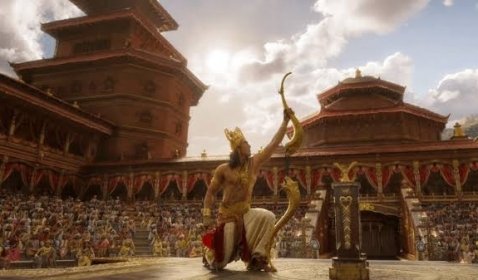
Few stories carry the cultural and spiritual significance of the Ramayana. Passed down through generations, the ancient Indian epic has inspired countless retellings across literature, theatre, television, and cinema. Bringing such a familiar yet deeply revered story to the big screen is no small undertaking. With Ramayana: Rise of a Legend, director Nitesh Tiwari attempts to transform this timeless tale into a grand cinematic event, combining Hindu mythology, spectacular fantasy, and the scale of a modern blockbuster. The result is undeniably ambitious, occasionally breathtaking, and frustratingly uneven.
Starring Ranbir Kapoor as Rama, Sai Pallavi as Sita, and Yash as Ravana, the film revisits the legendary conflict between a noble prince destined for greatness and a powerful king whose ambition and resentment lead him towards darkness. Rather than attempting to tell the entire epic in a single film, Rise of a Legend serves as the first instalment of a larger cinematic saga, establishing the characters, rivalries, and circumstances that will eventually shape the confrontation between Rama and Ravana.
The story begins in Ayodhya, where Rama's future as a ruler appears secure. Loved by his father, King Dasharatha, and admired for his sense of duty, he seems destined for a life of honour and responsibility. That future changes when palace politics and an old royal promise lead to his exile. Accompanied by Sita and his brother Lakshmana, Rama leaves the comforts of the kingdom behind and enters the forest, where events gradually set him on a collision course with Ravana, the formidable ruler of Lanka.
It is a familiar narrative for anyone acquainted with the epic, but familiarity is not necessarily a weakness. The Ramayana has endured because its central themes—duty, sacrifice, loyalty, temptation, and the struggle between righteousness and ambition—remain meaningful across generations. The challenge for a modern adaptation is to make those themes resonate through cinema rather than simply reproduce the events audiences already know.
Tiwari's film succeeds most clearly when it embraces the sheer scale of its material. From the grandeur of Ayodhya's royal surroundings to the vast landscapes that frame Rama's exile, the production aims to create a world that feels larger than ordinary human experience. The costumes, palaces, fantastical creatures, and elaborate environments reflect the filmmakers' determination to give the epic a visual identity worthy of its legendary status.
Some of the imagery is genuinely impressive. Sweeping landscapes and monumental architecture establish a sense of mythic grandeur, while the contrast between Rama's world and Ravana's kingdom gives the story a visual foundation for its opposing forces. The film understands that this is not merely a story about two men fighting for supremacy. It is a tale in which personal choices carry consequences that extend far beyond the individuals making them.
The scale also gives the film an undeniable theatrical appeal. Battles, supernatural encounters, and elaborate fantasy sequences are designed to fill the screen, offering a level of spectacle that benefits from a large cinema presentation. When the visual effects and choreography come together, the film occasionally achieves the sense of wonder that a story of this magnitude demands.
Unfortunately, spectacle alone cannot sustain an epic. For all its impressive ambition, Ramayana: Rise of a Legend frequently struggles to make its world feel emotionally alive. The film introduces a considerable number of characters, political conflicts, and mythological details, yet not all of them receive enough attention to become meaningful parts of the drama. Important developments can feel rushed, while scenes that should deepen the relationships between characters sometimes seem more concerned with moving the plot towards the next major event.
This is particularly noticeable in Rama's journey. As the central figure of the story, he should provide the emotional and moral foundation for everything that follows. Kapoor brings a composed presence to the role, conveying Rama's nobility and restraint, but the character often feels more symbolic than human. His righteousness is clear, yet the film does not always explore the inner conflicts that could make his commitment to duty more compelling.
A hero defined by virtue does not have to be dull. In fact, the most interesting portrayals of idealised figures often emerge when their principles are tested by circumstances that offer no easy answers. Rama's exile provides an opportunity to examine the personal cost of honour, the tension between private happiness and public responsibility, and the sacrifices demanded by his destiny. The film touches on these ideas, but it too often moves past them before they can develop into something emotionally substantial.
Sai Pallavi brings warmth and grace to Sita, giving the character a reassuring sense of dignity. Her presence provides an important emotional counterweight to the film's grander conflicts, and her relationship with Rama offers glimpses of the intimacy that can make an epic feel personal. However, the screenplay does not consistently give her enough space to emerge as a fully developed character in her own right. Sita's importance to the story is unquestionable, but the film could have done more to explore her individual perspective, strength, and emotional experience.
The more intriguing performance comes from Yash as Ravana. Rather than presenting him as a straightforward embodiment of evil, the film hints at a figure shaped by resentment, ambition, and a complicated relationship with power. His backstory introduces a degree of psychological depth that makes him an interesting counterpart to Rama, even when the screenplay struggles to explore that complexity fully.
Yash brings a commanding physical presence to the role, and his performance gives Ravana a weight that some of the film's other characters lack. He is dangerous without being merely monstrous, and his confidence suggests a ruler who has convinced himself that his strength justifies his choices. The contrast between Ravana's forceful personality and Rama's restraint gives the central conflict potential, although the film sometimes seems more interested in establishing their opposing destinies than in examining the moral differences between them.
That imbalance is one of the production's most significant missed opportunities. The story becomes more compelling when Ravana is allowed to exist as a character with motives and contradictions, rather than simply as the antagonist standing in Rama's path. His perspective could have provided a richer exploration of pride, injustice, and the destructive consequences of allowing resentment to become an identity. The film offers glimpses of that possibility, but its crowded narrative prevents the idea from receiving the attention it deserves.
The supporting cast further illustrates the difficulties of adapting such an expansive story. Ravi Dubey's Lakshmana serves as a loyal companion to Rama, while the wider ensemble helps establish the political and familial relationships surrounding the central figures. Yet several supporting characters are introduced with considerable significance only to disappear into the background as the story moves forward. The film's ambition to include so much of the epic sometimes comes at the expense of giving individual relationships room to breathe.
This becomes increasingly frustrating as the running time stretches beyond three hours. A story of this scale naturally requires patience, and there is nothing inherently wrong with a long fantasy epic. The problem is that length must be supported by narrative development. Each major sequence should reveal something new, deepen a relationship, or change the direction of the story. Here, the pacing occasionally becomes sluggish, with scenes that feel more like illustrations of familiar mythology than essential steps in the characters' journeys.
The action sequences are similarly inconsistent. Some possess the size and visual ambition expected from a production of this magnitude, but others lack clarity and impact. Rapid editing and effects-heavy imagery can make it difficult to follow the physical geography of a battle, reducing the sense of danger that should accompany these encounters. When the film pauses long enough to establish its characters and surroundings, the action becomes more engaging. When it relies on spectacle without sufficient dramatic grounding, the result can feel surprisingly weightless.
The visual effects are another point of contention. The film's strongest images demonstrate the potential of combining modern technology with the fantastical imagery of Indian mythology. Yet some computer-generated environments and creatures lack the texture and natural movement needed to make them convincing. Certain compositions look impressive at first glance but lose their impact when the camera moves or the action becomes more complicated.
This inconsistency is particularly disappointing because the production clearly has considerable resources at its disposal. Large budgets can create opportunities for filmmakers, but they cannot replace visual coherence or thoughtful artistic direction. The most effective fantasy films do not simply show audiences something enormous; they make that image feel as though it belongs to a living world. Ramayana: Rise of a Legend achieves this occasionally, but not reliably enough.
The music, composed by Hans Zimmer and A. R. Rahman, adds another layer of grandeur to the production. Their involvement raises expectations, and the score certainly aims to give the story an appropriately monumental sound. At its best, the music reinforces the sense of destiny surrounding Rama and the growing threat posed by Ravana. However, the film does not always integrate its musical and dramatic elements seamlessly. A powerful score can intensify an emotional moment, but it cannot create emotional depth where the screenplay has not established it.
The film's status as the opening chapter of a larger saga also creates a structural problem. There is a difference between leaving a story open for continuation and presenting an instalment that feels incomplete in itself. Rise of a Legend establishes the foundations for future developments, but its narrative does not always provide enough satisfying progression to justify its length. Viewers who expect a complete dramatic journey may find the experience frustrating, particularly when major conflicts remain unresolved.
Nevertheless, it would be unfair to overlook what the film gets right. Its scale reflects a genuine willingness to approach one of India's most important epics with international blockbuster ambition. The central cast contains moments of real strength, the production design has an impressive sense of grandeur, and the underlying story remains powerful even when the adaptation struggles to express it. The film's best sequences remind us why the Ramayana continues to inspire audiences: its themes are larger than any single retelling, and its central conflict can still carry emotional and philosophical weight.
The cultural significance of the source material also deserves consideration. For many viewers, Rama, Sita, and Ravana are not simply fictional characters but figures embedded in religious traditions and collective memory. Adapting their story therefore involves more than delivering entertainment. It requires sensitivity to the material while finding a cinematic language that can make its ideas accessible to new audiences. Tiwari's film approaches that responsibility with visible ambition, even if its execution is not always as assured as its intentions.
Ultimately, Ramayana: Rise of a Legend is a visually ambitious but uneven adaptation. It offers enough grand imagery, mythological intrigue, and strong moments from Yash and the wider cast to make the experience worthwhile, particularly for audiences who appreciate large-scale fantasy. Yet the uneven effects, inconsistent action, underdeveloped character relationships, and sprawling pacing prevent it from becoming the definitive cinematic treatment its source material deserves.
The film's greatest limitation is not a lack of ambition but an overreliance on it. It wants to be a landmark spectacle, a faithful retelling, a character drama, and the foundation of a major franchise all at once. Those goals are not incompatible, but they require a level of narrative discipline that the film does not consistently demonstrate.
There is still plenty to admire here, and the story has enough enduring power to sustain interest in what comes next. But grandeur is most effective when it serves the people at the centre of the story. Ramayana: Rise of a Legend occasionally achieves that balance, delivering moments in which mythology, emotion, and spectacle work together. Too often, however, the spectacle takes over, leaving the human drama struggling to keep pace.
Rating: 3/5
Do you like it? Let's share it!




NOW SHOWING






COMING SOON