
Spa Weekend — Four Friends, One Luxury Resort, and Far Too Few Laughs
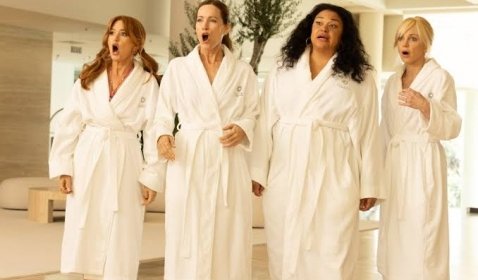
A comedy about four longtime friends escaping to a luxurious spa should, in theory, be an easy source of entertainment. Put four funny actors in an expensive hotel, remove their everyday responsibilities, add a few bad decisions and uncomfortable revelations, and the laughs should practically write themselves.
Unfortunately, Spa Weekend never quite finds that rhythm.
Directed by Jon Lucas and Scott Moore, the writers behind The Hangover, the film arrives with an obvious mission: to offer a female-driven counterpart to the kind of outrageous friendship comedy that has dominated the genre for years. Leslie Mann, Anna Faris, Michelle Buteau and Isla Fisher make up the central quartet, bringing together four women whose personalities and life circumstances are different enough to create plenty of potential for conflict.
Jane is the responsible, career-focused lawyer. Sophie is the eccentric personal assistant. Coco is a confident divorcée. Mel is the unpredictable member of the group, whose chaotic personality initially makes her the odd one out.
It sounds like a strong comedic setup.
The cast certainly has the talent. Mann has excellent comic timing, Faris knows how to turn awkwardness into laughs, Buteau brings plenty of personality, and Fisher has always been comfortable playing characters who exist somewhere between charming and completely unhinged. On paper, this should be an extremely entertaining ensemble.
The frustrating thing is how rarely the screenplay gives them material worthy of that talent.
Instead of allowing the women to simply have fun with the absurdity of a luxury spa weekend, Spa Weekend repeatedly steers toward emotional lessons. Characters reveal their insecurities, confront their personal problems and eventually learn something about themselves and one another. There is nothing wrong with sentiment in a comedy, but here the emotional material frequently overwhelms the humor.
The film seems convinced that every joke needs to lead to a heart-to-heart conversation.
That becomes especially noticeable with Mel. Her supposedly undesirable personality is initially treated as a source of conflict, before the narrative gradually turns her into the misunderstood friend everyone should appreciate. The message is pleasant enough—don't judge people too quickly, and perhaps embrace the weird friend in your group—but the execution is painfully predictable.
The biggest disappointment is the comedy itself.
Considering the pedigree of the filmmakers, Spa Weekend should be much funnier. The film occasionally produces a decent gag or an amusing exchange, but the jokes rarely build into the kind of escalating chaos that made The Hangover such a memorable comedy. Instead, many scenes feel carefully constructed around the expectation of a laugh without actually delivering one.
The result is a strange contradiction: the movie is filled with talented comedians, yet often feels afraid to be genuinely funny.
There are opportunities everywhere. The luxurious spa environment could have become a playground for outrageous situations. The characters' contrasting personalities could have produced wonderfully destructive arguments. Their attempts to escape adult responsibilities could have resulted in increasingly ridiculous consequences.
But Spa Weekend repeatedly chooses the safer option.
The setting also feels underused. A luxury hotel should provide endless possibilities for comedy, from ridiculous treatments to awkward encounters with other guests. Instead, the resort often feels like little more than a backdrop for conversations about relationships, careers and personal dissatisfaction.
That would be less problematic if the dramatic material were particularly compelling. Unfortunately, it isn't.
The screenplay's emotional breakthroughs are so clearly telegraphed that there is little surprise when the characters eventually reconcile. Rather than discovering something genuinely complicated about friendship in adulthood, the film settles for familiar lessons about accepting one another and letting go of insecurity.
The performances remain the film's saving grace.
Mann, Faris, Buteau and Fisher have enough chemistry to make their friendship believable, and there are glimpses of the movie that Spa Weekend could have been. Whenever the four women are allowed to interact without the screenplay forcing another emotional revelation, the film becomes considerably more entertaining.
There is also a certain charm in watching four middle-aged women occupy the centre of a broad comedy. The genre has historically given far more space to male friendships and male stupidity, so the basic idea behind Spa Weekend deserves credit. The problem isn't the concept. It's the lack of confidence in that concept.
The movie doesn't need to be another The Hangover. It simply needs to trust its performers enough to let them be funny.
Instead, Spa Weekend becomes increasingly sentimental as it moves toward its conclusion, leaving the audience with the feeling that the filmmakers were more interested in delivering a message about friendship than delivering a great comedy. The Guardian similarly found the film disappointing, awarding it two stars and describing it as a dud despite its talented cast and The Hangover pedigree.
There is nothing particularly offensive about Spa Weekend. It isn't unpleasant to watch, and audiences who enjoy uncomplicated friendship movies may find something comforting in its message. But comfort is not the same thing as comedy.
Ultimately, Spa Weekend is a missed opportunity. It has four capable comic performers, an appealing premise and filmmakers with proven experience in the genre. Yet instead of embracing the wonderfully messy possibilities of its setup, it settles for predictable emotional beats and lukewarm jokes.
The spa may promise relaxation, rejuvenation and escape from reality. Unfortunately, the comedy here could use all three.
Rating: ★★☆☆☆ (2/5)
Do you like it? Let's share it!




NOW SHOWING





COMING SOON