The Dog Stars — Lost in the Wilderness: Ridley Scott’s Apocalypse Struggles to Find Its Soul
Ridley Scott has spent much of his career creating worlds that feel larger than life. From the dark industrial nightmare of Alien to the futuristic sprawl of Blade Runner, he has always understood how to make unfamiliar landscapes feel immersive. The Dog Stars, however, presents a different kind of world: one that has already ended.
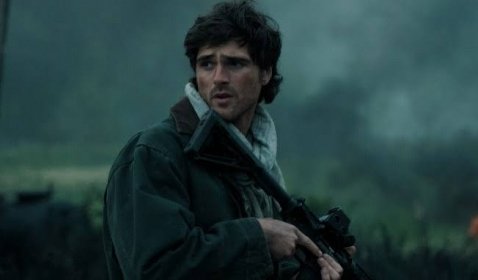
Adapted from Peter Heller’s novel, the film follows Hig, played by Jacob Elordi, a survivor of a devastating flu pandemic that has almost wiped out humanity. Living in isolation at an abandoned airfield with his loyal dog Jasper and the heavily armed survivalist Bangley, played by Josh Brolin, Hig exists in a world where staying alive has become routine—but actually living has become something far more difficult. A mysterious radio transmission eventually gives him a reason to leave his isolated existence and search for the possibility of something beyond survival.
On paper, The Dog Stars has everything needed for a compelling post-apocalyptic drama. There is loneliness, grief, danger, a fractured friendship and the possibility of rediscovering human connection after unimaginable loss. The problem is that the film rarely brings these ideas together with enough urgency or emotional force.
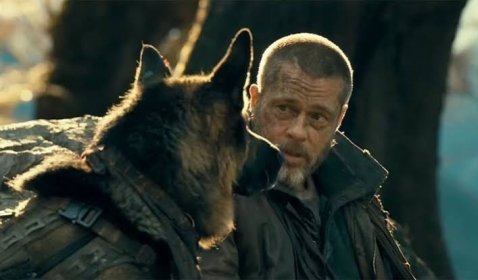
Jacob Elordi gives a restrained performance as Hig, and that restraint suits the character's isolation. There is a quiet sadness behind him, a sense that he has been surviving for so long that he has forgotten what he is supposed to be surviving for. Elordi is most effective in the film's quieter moments, particularly when Hig's relationship with Jasper reminds us that, in this broken world, companionship can come in forms far simpler and more dependable than human connection.
Jasper, unsurprisingly, may be the film's most immediately lovable presence.
Josh Brolin brings a rough physicality to Bangley, the hardened survivalist whose approach to life sharply contrasts with Hig's lingering optimism. Their relationship should be the emotional backbone of the first half, but the screenplay often reduces their differences to repetitive exchanges and bluntly stated ideological conflicts. Instead of allowing tension to grow naturally, the film occasionally explains too much of what the characters are already showing.
When Hig finally ventures into the unknown, The Dog Stars opens up both geographically and emotionally. Margaret Qualley and Guy Pearce bring new energy to the story, introducing the possibility of a future that is not defined entirely by fear. These later sections contain some of the film's most tender and effective material, particularly in their exploration of loneliness, grief and the fragile desire to trust someone again. Other critics have also found more warmth in the film's intimate and hopeful moments than in its more conventional survival-thriller elements.
Visually, the film has the craftsmanship one expects from Ridley Scott. The ruined world is often beautifully photographed, and the contrast between vast natural landscapes and abandoned human spaces gives the movie an appropriately melancholic atmosphere. There are several images that linger long after individual scenes have ended.
But beautiful images cannot completely hide a familiar problem: The Dog Stars often feels like it has seen too many other post-apocalyptic movies.
The genre's usual ingredients are all here—pandemic devastation, isolated survivors, armed marauders and communities built around fear. The film rarely finds a distinctive enough angle to make those familiar elements feel genuinely new. Some action sequences arrive with more noise than tension, while the antagonists never become as memorable or frightening as the film needs them to be. The result is a story that frequently feels caught between an intimate meditation on loss and a more conventional survival adventure.
That uncertainty extends to the pacing. The Dog Stars is at its best when it slows down and allows Hig's loneliness to breathe. Ridley Scott captures the strange emptiness of a world where nature continues even after civilization has collapsed. Yet whenever the film shifts into familiar action territory, its personality becomes less clear. The quieter story is the more interesting one, but the movie repeatedly interrupts it to deliver genre mechanics that feel less inspired.
The supporting cast does what it can with the material. Margaret Qualley brings sensitivity to her role, while Guy Pearce and Josh Brolin add welcome weight whenever the screenplay gives them something substantial to play. Still, several relationships feel underdeveloped, and some emotional turns arrive before the film has fully earned them.
This is ultimately what makes The Dog Stars disappointing rather than disastrous.
There is a good film buried inside it—a melancholy story about a man learning that survival without connection is only another form of loneliness. At times, Ridley Scott finds that film. When he does, The Dog Stars can be unexpectedly tender, visually striking and quietly moving.
Too often, however, it loses confidence and falls back on familiar post-apocalyptic territory.
For a film about searching for hope in the ruins of the world, The Dog Stars occasionally feels strangely lost itself. It has moments of beauty, a strong cast and a genuinely affecting central idea, but it never fully discovers the emotional power its premise promises.
Rating: ★★★☆☆ (3/5)
Do you like it? Let's share it!

NOW SHOWING




COMING SOON