The Fox — A Wickedly Strange Fairytale Where Love, Obsession, and Human Nature Collide
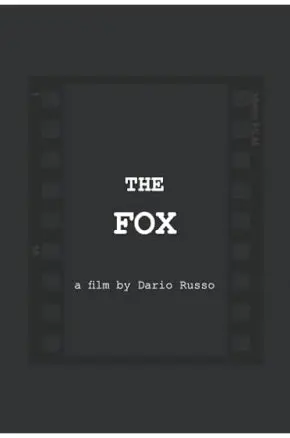
Every now and then, a film arrives with a premise so peculiar that it becomes almost impossible to predict where the story will go. The Fox, the Australian dark comedy written and directed by Dario Russo, is one such film. Blending rural absurdity, twisted fairytale logic and an uncomfortable look at romantic relationships, it takes an ordinary man's heartbreak and turns it into something increasingly bizarre. The result is an eccentric, darkly amusing film that deserves credit for its imagination, even if its ambitions occasionally outgrow its storytelling.
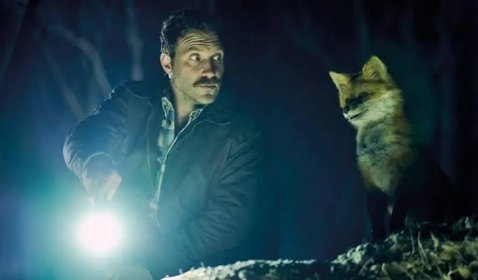
Jai Courtney stars as Nick, an ordinary man living in rural Australia who seems to have a reasonably comfortable life. He is engaged to Kori (Emily Browning), a veterinarian who appears to be the woman of his dreams. Unfortunately, their relationship is far less idyllic than Nick believes. When he discovers that Kori is having an affair with her colleague Derek (Damon Herriman), his disappointment quickly turns into desperation.
Rather than accepting that his relationship may be beyond repair, Nick encounters an unlikely source of advice: a talking fox voiced by Olivia Colman. The animal offers him a peculiar solution. If Nick wants to transform Kori into the perfect partner, all he needs to do is push her into a mysterious hole with supernatural properties. Nick agrees to the arrangement, setting off a chain of increasingly strange events that forces him to confront the difference between loving someone and wanting to control them.
It is an absurd premise, but there is a recognisable human weakness at its centre. Nick does not simply want to recover from heartbreak. He wants to eliminate the uncertainty that comes with loving another person. Rather than considering what went wrong in his relationship, he chooses the fantasy of a partner who will never disappoint him. The film's central joke is also its central warning: the desire for a perfect relationship can become deeply disturbing when perfection means removing another person's freedom.
Courtney gives the film a surprisingly effective lead performance. Nick is hardly a conventional romantic hero. He can be childish, insecure and frustratingly self-centred, yet Courtney plays him with enough sincerity to make his behaviour entertaining rather than merely irritating. His character is not particularly intelligent, but he possesses the stubborn confidence of someone who believes every problem must have a simple solution. Watching that confidence collide with increasingly bizarre circumstances provides much of the film's comedy.
What makes Courtney's performance work is his willingness to embrace Nick's shortcomings. He does not try to make the character more admirable than the screenplay allows. Instead, he finds humour in Nick's awkwardness and desperation, creating a protagonist who can be ridiculous without becoming entirely unbelievable. There is even a degree of sympathy in his portrayal, although the film wisely refuses to suggest that heartbreak excuses the choices he makes.
Emily Browning is equally important to the film's success. As Kori, she brings a sense of frustration and emotional distance to a relationship that has clearly become unhealthy long before Nick discovers her affair. Her performance helps establish that the couple's problems cannot be reduced to a single betrayal. There is a history of dissatisfaction beneath their seemingly ordinary life together, and Browning gives Kori enough personality to suggest that she has desires and frustrations of her own.
The film's treatment of Kori, however, is also one of its most uncomfortable elements. Its premise deliberately plays with the fantasy of turning a partner into an idealised version of themselves, but the transformation raises difficult questions about agency, consent and the expectation that women should exist to satisfy male desires. These are potentially rich themes for a dark comedy, and the film occasionally approaches something genuinely provocative. Yet it does not always examine the consequences of its own premise with the depth it deserves. At times, its willingness to provoke feels more developed than its willingness to explore what that provocation actually means.
Olivia Colman provides one of the film's most memorable performances, despite never appearing on screen as a conventional human character. Her voice gives the fox a wonderfully composed, quietly mischievous personality. Rather than relying on exaggerated villainy, Colman makes the animal sound almost reasonable, as though the disturbing arrangement she proposes is simply another practical solution to a common human problem.
That calm delivery makes the fox particularly effective. She observes humanity with a mixture of amusement and contempt, treating human anxieties as strange habits that people insist on making unnecessarily complicated. Colman's performance gives the character a sharp personality without overwhelming the film's deliberately understated humour. It is the kind of voice performance that could easily have become a gimmick, but her precise timing and dry delivery make the fox an essential part of the experience.
Sam Neill is another welcome presence as a foul-mouthed magpie who offers his own commentary on the unfolding absurdity. His performance adds a distinctly Australian flavour to the film's already unusual world, and the contrast between the magpie's abrasive personality and the fox's composed manner creates some of its funniest exchanges. The talking animals are not treated as extraordinary visitors from a magical realm. They simply exist alongside humans, behaving as though their conversations are the most natural thing in the world.
That approach captures much of what makes The Fox distinctive. Russo does not spend much time explaining the rules of his strange universe. Instead, he asks the audience to accept its peculiarities and follow the story wherever they lead. The result is a kind of rural fairytale in which supernatural events coexist with familiar Australian settings, ordinary relationship problems and characters who seem remarkably unfazed by the impossible.
Visually, the film benefits from its practical effects and puppetry. The fox and magpie have a tangible presence that gives their interactions a peculiar charm. Rather than relying entirely on polished digital effects, the production embraces a slightly old-fashioned quality that suits the story's fairytale atmosphere. There is something refreshing about seeing a film commit to physical creatures and practical techniques, particularly when the surrounding material is already so unconventional.
Russo's direction also gives the film a recognisable personality. His background in offbeat comedy is evident in the deliberately awkward exchanges, unusual character behaviour and willingness to let a joke become uncomfortable before moving on. The rural setting contributes to the effect, grounding the supernatural premise in a world of familiar routines and small-town relationships. The contrast between the ordinary environment and the increasingly bizarre events creates much of the film's humour.
The difficulty is that the film's unusual premise sometimes promises more than its narrative delivers. The magical transformation provides a strong starting point, but the story occasionally feels as though it is searching for the most outrageous development rather than building naturally toward a satisfying conclusion. Individual scenes can be inventive and funny, yet their cumulative effect is less consistent.
The pacing also suffers when the film becomes too attached to its own eccentricity. Absurdity works best when it reveals something about the characters or pushes the story in an unexpected direction. Here, some developments feel entertaining in isolation but contribute relatively little to the film's broader ideas. The result is a narrative that can be fascinating one moment and frustratingly loose the next.
The comedy itself is similarly uneven. Much of the humour comes from the contrast between the characters' ordinary behaviour and the extraordinary situation surrounding them. Other jokes rely on discomfort, vulgarity or the sheer audacity of the premise. When these elements work together, The Fox is genuinely funny. When they do not, the film can feel more interested in being strange than in being amusing.
Still, its best moments reveal a sharper film beneath the eccentric surface. Nick's attempt to manufacture the relationship he wants becomes a distorted reflection of a familiar impulse: the belief that happiness depends on changing someone else rather than examining ourselves. The supernatural elements make that impulse literal, turning an everyday relationship problem into a grotesque fantasy about control.
There is also something quietly cynical about the film's view of human nature. The animals often seem more perceptive than the people around them, recognising the absurdity of human desires while humans remain trapped by insecurity and self-interest. Yet the film does not present its animal characters as straightforward moral authorities. They have their own agendas, and their advice is not necessarily offered out of kindness. That ambiguity gives the story a mischievous edge and prevents its moral lessons from becoming entirely predictable.
Ultimately, The Fox is at its most successful when it trusts its characters and its central idea rather than trying to make every scene more outrageous than the last. Courtney and Browning give the relationship a degree of emotional credibility, Colman makes the titular fox wonderfully memorable, and Neill adds an irreverent energy that suits the film's unusual tone. Together, they create a strange little comedy that feels distinctly Australian without relying solely on familiar national stereotypes.
It is not a perfectly constructed film, and its thematic ambitions occasionally outpace its storytelling. Nevertheless, there is enough originality here to make it stand apart from more conventional romantic comedies and fantasy films. Its imperfections are frustrating, but its willingness to embrace an unusual idea is admirable.
Final Verdict: The Fox is a delightfully odd Australian dark comedy with a strong central concept, memorable voice performances and a willingness to explore the uglier side of romantic obsession. Jai Courtney makes an unexpectedly compelling protagonist, while Olivia Colman gives the fox a sly personality that elevates the film's strangest moments. Its loose narrative and underdeveloped social commentary prevent it from reaching its full potential, but its imagination and distinctly offbeat humour make it worth watching.
Rating: 3.5/5 stars
Do you like it? Let's share it!


NOW SHOWING
COMING SOON