The Further Mis-Adventures of Cliff Booth — Brad Pitt Returns in a Bloody, Beautifully Chaotic Love Letter to Old Hollywood
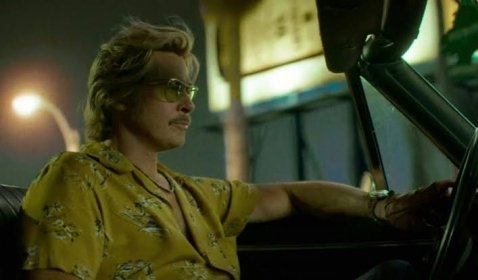
Some movie characters are simply too entertaining to leave behind. Cliff Booth, the laid-back stuntman played by Brad Pitt in Once Upon a Time in Hollywood, is one of them. He was never the loudest person in the room, nor did he need to be. His quiet confidence, dry humour and unsettling capacity for violence made him an unforgettable presence in Quentin Tarantino’s alternative vision of Hollywood. Now, with The Further Mis-Adventures of Cliff Booth, the character returns for another chapter, this time under the direction of David Fincher. The result is an entertaining, occasionally meandering crime story that captures much of Cliff’s original appeal while struggling to justify the need for another trip into his world.
Set in Los Angeles in 1977, eight years after the events of the previous film, the story finds Cliff in a very different stage of life. His days as a stuntman are largely behind him, and a lingering injury has left him with a slight limp. He spends his time juggling odd jobs, including working as a bartender and a projectionist at the historic New Beverly Cinema. Yet Cliff has not entirely abandoned his connections to Hollywood. He has become a discreet fixer, the kind of man powerful people contact when their problems require someone who knows how to operate outside the rules.
His latest assignment comes through Karen Crosby, a sharp and intriguing talent agent played by Elizabeth Debicki. She wants Cliff to help her client, television star Charlie Peters, portrayed by Scott Caan, whose personal and professional troubles threaten to spiral out of control. What initially appears to be another straightforward favour soon draws Cliff into a dangerous world of blackmail, extortion and violent criminal dealings.
The setup gives Tarantino plenty of room to revisit the world he created in Once Upon a Time in Hollywood, but this time the fairy tale has faded. The city feels rougher, its glamour less convincing, and the entertainment industry increasingly resembles a playground for people who believe money and influence can protect them from consequences. Cliff, meanwhile, remains the same strangely reassuring presence in the middle of the chaos.
That familiarity is both the film’s greatest strength and its most obvious limitation.
Brad Pitt slips back into the role with remarkable ease. There is no sense of him struggling to rediscover Cliff’s mannerisms or personality; the character seems to exist naturally within his performance. Pitt understands that Cliff’s appeal comes from his refusal to take almost anything seriously. He can be charming without appearing to try, intimidating without raising his voice and funny without seeming particularly interested in entertaining anyone.
What makes the performance especially effective is the way Pitt allows small details to do the work. A look, a pause or a casually delivered remark can communicate more than an elaborate speech. Cliff has spent enough time around violence to understand that most situations are not worth getting worked up over. Watching him navigate increasingly dangerous circumstances with his usual relaxed attitude is one of the film’s greatest pleasures.
Yet there is something more reflective beneath that familiar coolness. Cliff is older now, and the film occasionally suggests a man who has become comfortable with his own place in the world. He is no longer chasing a career or trying to prove himself. Instead, he drifts between jobs and relationships, seemingly content to let life happen around him. Pitt gives the character a subtle sense of weariness without stripping away the charisma that made him memorable in the first place.
Debicki is another major asset. As Karen Crosby, she brings intelligence, confidence and a welcome degree of unpredictability to the story. Her relationship with Cliff becomes one of its most engaging elements, offering something more personal than the criminal schemes surrounding them. Their exchanges have a playful tension, and Debicki is more than capable of matching Pitt's understated charm. Karen feels like someone who understands Hollywood’s manipulative machinery but has learned to survive within it rather than simply complain about it.
Scott Caan also makes a strong impression as Charlie Peters, a television star whose ego and temper create problems for almost everyone around him. Caan gives the character an amusingly abrasive personality, making him both irritating and strangely entertaining. His scenes with Pitt have a natural rhythm, particularly when Charlie’s self-importance collides with Cliff’s complete lack of interest in celebrity status.
The supporting cast adds further colour to the film’s sprawling portrait of late-1970s Los Angeles. Carla Gugino brings a compelling presence as Toni, while Yahya Abdul-Mateen II adds personality to the world of television and exploitation cinema that surrounds Charlie. Peter Weller is equally memorable as Cliff’s cantankerous father, Gus. These characters help make the film feel like a living environment rather than merely a vehicle for its leading man.
In many ways, the film works best when it has no particular urgency to reach its next plot point. Cliff working at the cinema, exchanging remarks with his father or getting caught up in another Hollywood personality’s problems can be more entertaining than the larger criminal storyline. Tarantino has always understood that memorable characters can make seemingly insignificant conversations feel essential. Here, those smaller moments allow the audience to spend time with Cliff without constantly needing an explanation for his behaviour.
This is also where Fincher’s involvement becomes interesting. His films are often associated with meticulous control, precise editing and a distinctly unsettling view of human behaviour. Tarantino, by contrast, enjoys letting conversations wander, allowing his characters to reveal themselves through tangents, arguments and unexpected bursts of absurdity. Their collaboration sounds unusual on paper, and the film occasionally feels like a negotiation between two very different filmmaking philosophies.
Fincher brings a sharper visual discipline to Tarantino’s screenplay. The Los Angeles he creates is grimier and less romantic than the one seen in Once Upon a Time in Hollywood. The city still contains the seductive mythology of the entertainment business, but its streets and interiors suggest something more cynical lurking beneath the surface. Violence, when it arrives, often feels less like a choreographed spectacle and more like an unpleasant interruption.
That distinction gives the film a different personality from its predecessor. Tarantino’s original film frequently treated Hollywood as a place of fantasy, nostalgia and cinematic possibility. Fincher’s version is more interested in the darker mechanisms that keep the fantasy alive: favours, secrets, intimidation and the unspoken arrangements that allow powerful people to avoid accountability.
The result is occasionally fascinating. The film does not abandon Tarantino’s taste for dark comedy or colourful dialogue, but it places those elements in a world that feels less forgiving. Cliff may still be an appealing figure, yet the environment around him has become more threatening, and the violence carries an uncomfortable weight.
Unfortunately, the film's narrative is less convincing than its atmosphere and performances.
At 143 minutes, The Further Mis-Adventures of Cliff Booth has considerable room to explore its characters, but its episodic structure can make the central story feel unfocused. The narrative moves through different jobs, conversations and encounters, often pausing to introduce another colourful personality or detour into a separate incident. Some of these passages are genuinely enjoyable, but others seem to exist primarily because Tarantino wants to spend more time in the world he has created.
There is a fine line between allowing a story to breathe and allowing it to drift. The film occasionally crosses that line. Its slower passages are not necessarily dull, but they do not always build toward anything substantial. For a story involving blackmail, criminal schemes and dangerous people, the sense of forward momentum can be surprisingly weak.
The contrast between Tarantino’s sprawling writing and Fincher’s typically controlled filmmaking also creates a few awkward moments. Fincher can tighten the rhythm of individual scenes, but he cannot entirely overcome the feeling that the screenplay contains several stories competing for attention. The result is a film that can be wonderfully entertaining one moment and frustratingly aimless the next.
There is also the unavoidable question of whether Cliff needed another film. His appearance in Once Upon a Time in Hollywood felt complete enough to leave the audience satisfied, with his future deliberately open to interpretation. Bringing him back inevitably risks diminishing the mystery that made him so compelling.
To its credit, the sequel does not simply repeat the original film’s premise. It shifts the focus toward crime, celebrity and the less romantic side of Hollywood, while allowing Cliff to exist beyond his relationship with Rick Dalton. Nevertheless, it frequently leans on the audience’s affection for the character rather than developing a sufficiently powerful reason for his return. Familiar references and echoes of the previous film can be amusing, but nostalgia alone cannot sustain an entire feature.
The film is at its most successful when it examines the gap between Hollywood’s public image and the less glamorous reality behind it. Cliff has become a kind of legend, but he remains a working man navigating a world full of people who confuse reputation with character. He is useful because of what he can do, not because of what he represents. That tension gives the story a quiet emotional undercurrent, even when the main plot becomes unnecessarily complicated.
The conclusion delivers a more forceful burst of crime-movie energy, giving the story some of the violence and pulp excitement that its slower sections occasionally lack. It is entertaining, although the film’s final movements do not entirely resolve the feeling that this adventure has taken the long way around to reach its destination.
Still, there is enough pleasure here to make the journey worthwhile. Pitt remains effortlessly watchable, Debicki provides a compelling new presence in Cliff’s life, and Fincher gives Tarantino’s familiar world a harsher visual identity. The film may not be as emotionally complete as its predecessor, but it offers an intriguing alternative perspective on a character who could easily have remained a supporting player in someone else’s story.
Ultimately, The Further Mis-Adventures of Cliff Booth is a film that succeeds more through personality than plot. It is funny, violent, occasionally touching and frequently absorbing, even when its storytelling loses direction. It may not reach the heights of Once Upon a Time in Hollywood, but it demonstrates that Cliff Booth still has enough charisma to carry a film of his own.
Final Verdict: The Further Mis-Adventures of Cliff Booth is an entertaining return to Tarantino’s version of Hollywood, elevated by Brad Pitt’s effortless performance and David Fincher’s darker, more controlled direction. Elizabeth Debicki and Scott Caan provide excellent support, and the film’s portrait of a changing entertainment industry offers plenty to appreciate. However, its meandering narrative, excessive detours and reliance on familiar characters prevent it from becoming a truly essential sequel. It is a welcome reunion, just not an entirely necessary one.
Rating: 3.5/5 stars
Do you like it? Let's share it!


NOW SHOWING

COMING SOON