The Rings of Power S3E7 — “Forging the One Ring”: The Birth of Darkness and the Price of Absolute Power
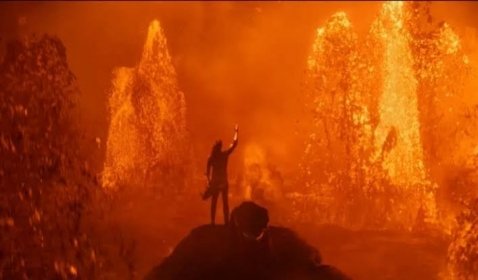
Few objects in fantasy carry the weight of the One Ring. It is more than a weapon or a symbol of evil; it represents the desire to control everything, including the hearts and minds of those who believe themselves beyond corruption. For years, The Lord of the Rings: The Rings of Power has been building toward the moment when Sauron finally creates his most infamous instrument of domination. In “Forging the One Ring,” that long-awaited moment arrives, giving the series one of its most consequential chapters yet.
The episode centres on Sauron’s determination to complete the Master Ring, the creation that could give him the power to bring the other Rings of Power under his influence. Following the devastating conflicts of the previous season, Middle-earth remains divided, with the Elves struggling to protect their realms and Sauron steadily expanding his reach. Yet military victories alone are not enough for the Dark Lord. He needs something capable of turning his ambitions into lasting dominion.
That makes the forging of the One Ring the episode’s natural dramatic centre. This is not simply a matter of putting precious metals into a furnace and producing an extraordinary artefact. It is the culmination of Sauron’s obsession with order, control and the belief that Middle-earth can be remade according to his own vision. The ring is the physical expression of that philosophy, and its creation gives the series an opportunity to explore the distinction between power and the desire to possess it completely.
Charlie Vickers remains the episode’s greatest asset. His portrayal of Sauron has gradually developed into one of the show’s most compelling performances, balancing charm, calculation and a deeply unsettling sense of entitlement. He understands that Sauron is most dangerous when he does not need to raise his voice. His confidence can be seductive, but beneath it lies a character who cannot tolerate the possibility that someone might refuse to submit to him.
What makes Vickers particularly effective is the tension between Sauron’s immense ambition and his moments of frustration. He wants to see himself as the architect of a perfect order, yet his repeated obstacles reveal how much he depends on circumstances and people he cannot entirely control. The One Ring becomes his answer to that problem. Rather than accepting the limits of his influence, he seeks a means of eliminating those limits altogether.
The character’s relationship with Galadriel adds another layer to this ambition. Their connection has always been one of the series’ more divisive creative choices, but it remains important to understanding the emotional dimension of Sauron’s plans. His desire to master the Rings is not presented solely as a strategic objective; it is also tied to his fixation on Galadriel and his refusal to accept that she may remain beyond his reach. That personal obsession makes his pursuit of absolute power more disturbing, even if the series sometimes pushes the relationship into melodramatic territory.
Morfydd Clark continues to give Galadriel a convincing mixture of determination and vulnerability. Her character has endured considerable loss, and the consequences of her earlier decisions remain part of her struggle. Rather than functioning merely as Sauron’s opposite, Galadriel represents the possibility of resisting the temptation to impose one's will on others. Her storyline is strongest when the show allows that conflict to emerge through her choices rather than explaining it through lengthy speeches.
The episode also benefits from the broader mythology surrounding the Rings of Power. The earlier rings have already demonstrated that extraordinary craftsmanship can carry consequences far beyond the intentions of those who create it. The One Ring raises the stakes by bringing that idea to its most dangerous conclusion. The question is no longer whether power can preserve or protect a civilisation, but whether the pursuit of perfect control will ultimately destroy the very thing it claims to improve.
Visually, “Forging the One Ring” delivers the kind of spectacle viewers expect from a production of this scale. The show’s elaborate environments, dramatic lighting and sense of physical grandeur give the forging an appropriate feeling of historical significance. Fire, metal and ancient craftsmanship become part of the storytelling, creating a contrast between the beauty of the process and the darkness of its purpose.
The visual ambition is especially effective because the One Ring’s creation carries a significance that extends beyond this episode. Audiences familiar with J. R. R. Tolkien’s wider mythology already know what the ring will eventually become, but that knowledge does not eliminate the suspense. Instead, it gives the scene a sense of tragic inevitability. We are watching the creation of an object whose influence will reach far beyond the intentions of the person holding it.
Still, impressive production values cannot solve every problem with the series. The writing continues to struggle with an excess of plotlines, shifting between political conflicts, personal relationships and the various peoples of Middle-earth. Some of these threads provide useful context, but others interrupt the central drama before it has enough time to develop. The result is an episode that can feel simultaneously monumental and fragmented.
The dialogue is another mixed element. The series aims for the elevated language associated with Tolkien’s world, yet some exchanges lean too heavily on grand declarations and solemn observations. There is a difference between language that feels ancient and language that simply sounds elaborate. When the writing relies too much on the latter, emotional moments lose some of their force.
There is also a broader question about how freely the series expands Tolkien’s mythology. Adaptation inevitably requires interpretation, particularly when a television production attempts to dramatise events that the original material does not describe in extensive detail. Reimagining the process behind the One Ring’s creation is not inherently a problem. The challenge is ensuring that those additions deepen the mythology rather than making its established themes less coherent.
At its best, this episode succeeds because it connects a spectacular event to a recognisable human weakness. Sauron does not seek power simply because he is evil; he believes that his vision justifies the methods required to achieve it. That conviction is what makes him frightening. He can interpret domination as order and obedience as peace, convincing himself that the destruction of freedom is an acceptable price for a world shaped according to his desires.
The episode’s greatest achievement is therefore not merely showing the One Ring being forged. It is presenting that moment as the culmination of a character’s increasingly dangerous worldview. The ring becomes the perfect expression of Sauron himself: beautiful in its simplicity, extraordinary in its potential and horrifying in what it demands from everyone who comes under its influence.
Even so, the episode does not completely escape the unevenness that has affected The Rings of Power since its debut. Its central storyline is compelling, but the surrounding material sometimes dilutes its impact. The performances and visual spectacle carry much of the weight, while the screenplay occasionally struggles to provide the same level of precision.
Ultimately, “Forging the One Ring” is a significant chapter in the series, offering a long-awaited development in Sauron’s rise while reinforcing the themes of temptation, control and corruption that define Tolkien’s mythology. It may not resolve every weakness in the show’s storytelling, but it gives its central villain a moment worthy of his place in Middle-earth’s history.
Final Verdict: “Forging the One Ring” delivers an impressive blend of fantasy spectacle and character-driven drama, anchored by Charlie Vickers’ compelling performance as Sauron. Its central event feels appropriately momentous, and the episode makes the One Ring’s creation more than a visual achievement. However, uneven pacing, occasionally overblown dialogue and competing storylines prevent it from reaching the full dramatic power of its premise. A strong and consequential episode, even if the series still has some way to go before becoming truly exceptional.
Rating: 3.5/5 stars
Do you like it? Let's share it!


NOW SHOWING



COMING SOON